
Defending Against Unlawful Manufacture/Import of Armor-Piercing Ammunition (18 U.S.C. 922a(7))
Receiving notice of a federal investigation or indictment regarding armor-piercing ammunition is a critical legal matter that carries the potential for significant prison time. Under 18 U.S.C. § 922(a)(7), federal law strictly prohibits the manufacture or importation of armor-piercing ammunition.
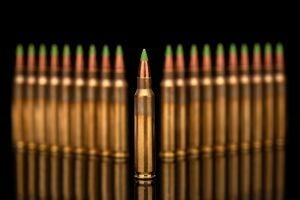
This statute addresses the manufacture and distribution of these rounds, distinguishing it from laws that merely penalize possession.
Defending against these charges is complex and requires more than general criminal defense knowledge.
These cases often hinge on highly technical metallurgical definitions and the government's ability to prove specific intent. A successful defense demands a rigorous examination of whether the ammunition's composition meets the strict statutory definition of "armor-piercing" under federal guidelines.
At Eisner Gorin, LLP, we apply a team-based approach to these high-stakes regulatory matters to protect your future. To schedule a consultation, call us today at 818-781-1570 or contact us here.
What Is Prohibited Under 18 U.S.C. § 922(a)(7)?
18 U.S.C. 922(a)(7) makes it unlawful for any person to manufacture or import armor-piercing ammunition. The focus of this specific law is squarely on the creation and introduction of these rounds into the country, rather than on other activities.
The government must prove beyond a reasonable doubt that an individual or entity was actively engaged in one of these two specific actions.
The "Person" Requirement
The term "person" under this statute is broad, encompassing not only individuals but also corporations and other business entities. This means that both a private individual assembling rounds in a workshop and a company producing them on a larger scale can be prosecuted.
Furthermore, the law applies regardless of whether the person or entity holds a Federal Firearms License (FFL), unless a specific exception is met.
Exceptions to the Rule
The law includes several key exceptions where the manufacture or importation of armor-piercing ammunition is permissible. These activities are not considered criminal if they are conducted for:
- The use of the United States, any State, or any department or agency of a State.
- The purpose of exportation.
- The purpose of testing or experimentation authorized by the Attorney General.
If a defendant's actions fall under one of these authorized categories, they do not constitute a violation of the statute.
What Qualifies as “Armor-Piercing Ammunition”?
Under 18 U.S.C. § 921(a)(17)(B), "armor-piercing ammunition" refers to ammunition having a core made of specific metals—like tungsten, steel, or brass—and meeting certain weight and design standards for handguns.
In federal criminal cases involving ammunition, the specific technical definition of the evidence is the single most important factor.
If the ammunition in question does not meet the exact chemical or physical criteria outlined in the statute, no federal crime has been committed under 18 U.S.C. 922(a)(7).
It is not enough for a prosecutor to argue that a round could penetrate body armor; they must prove it fits the statutory description.
The Composition-Based Definition
The first standard addresses the composition of the projectile. To qualify as armor-piercing under this section, a projectile or projectile core must be constructed entirely from one or a combination of the following specific metals:
- Tungsten alloys
- Steel
- Iron
- Brass
- Bronze
- Beryllium copper
- Depleted uranium
If the core of the projectile contains lead or if it is an alloy not listed above, it likely does not meet this definition. This metallurgical distinction is often where we focus our defense, utilizing independent testing to challenge the government's lab results.
The Design-Based Definition
The second standard focuses on the physical design and intended use of the ammunition. A round may be classified as armor-piercing if it meets the following criteria:
- It is a full metal jacketed projectile larger than .22 caliber; and
- It is designed and intended for use in a handgun; and
- The jacket has a weight of more than 25 percent of the total weight of the projectile.
This standard is highly technical. It requires the government to prove not only the weight and size but also the specific design intent of the round.
The "Handgun" Standard
Under the legal definition of "armor-piercing ammunition," the ammunition must be "designed and intended for use in a handgun." Many rifle rounds are naturally capable of piercing armor due to their high velocity, but they are not illegal under this statute.
If the ammunition was designed solely for use in a rifle, it generally does not fall under the definition of armor-piercing ammunition, even if it has armor-piercing capabilities.
This legal distinction protects manufacturers of standard rifle ammunition from being improperly charged.
Statutory Exclusions
Finally, the law specifically excludes certain types of ammunition from this definition, even if they might otherwise appear to qualify. The primary exclusions include:
- Shotgun Shot: Projectiles required for federal or state hunting regulations.
- Sporting Purpose: Projectiles that the Attorney General has found are primarily intended to be used for sporting purposes (such as target shooting or hunting).
Understanding these definitions allows us to dismantle the prosecution's case element by element. If the ammunition seized does not fit these narrow categories, the charges may be unfounded.
What Are the Penalties for Manufacturing or Importing Armor-Piercing Ammo?
If you're convicted of illegally making or importing armor-piercing ammunition, you could face up to five years in federal prison, as well as fines of up to $250,000.
Imprisonment and Statutory Fines
Under 18 U.S.C. § 924(a), a willful violation of § 922(a)(7) is a federal felony. If convicted, a defendant faces a maximum sentence of up to five years in federal prison.
Unlike state systems, where probation is common for first-time offenders, federal sentencing guidelines often result in actual time served, even for individuals with limited criminal history.
In addition to incarceration, the court may impose substantial financial penalties. Fines for individuals can reach up to $250,000 per count, while organizations may face even higher monetary sanctions.
These fines are separate from the costs associated with legal defense and potential asset forfeiture.
Sentencing Enhancements for Related Crimes
It is rare for federal prosecutors to charge 18 U.S.C. § 922(a)(7) in a vacuum. Often, the manufacture of armor-piercing ammunition is alleged to be part of a broader criminal enterprise.
If the government can prove that the ammunition was manufactured or imported in connection with a "crime of violence" or "drug trafficking crime," penalties escalate severely under 18 U.S.C. § 924(c).
These enhancements may impose mandatory minimum consecutive sentences on the underlying charge. For example, using or carrying a firearm during such crimes carries a mandatory minimum of five years, which increases significantly if the firearm is brandished or discharged.
While the ammunition charge itself has a maximum of five years, the aggregate sentence in a multi-count indictment may result in decades of imprisonment.
How Do Federal Agencies Investigate These Crimes?
The Bureau of Alcohol, Tobacco, Firearms, and Explosives (ATF) is the primary federal agency responsible for investigating violations of the Gun Control Act, including the manufacture of armor-piercing ammunition.
The ATF employs special agents and highly trained industry operations investigators (IOIs) who specialize in tracing the flow of firearms and ammunition.
Unlike local police, the ATF has access to a national network of forensic laboratories capable of analyzing the metallurgical composition of projectiles. Once an investigation is opened, agents utilize a vast array of resources to build a case before an indictment is ever handed down.
Common Triggers for Investigation
Federal investigations into armor-piercing ammunition often begin quietly. The most common triggers that alert federal authorities include:
- FFL Audits and Inspections: Federal Firearms Licensees (FFLs) are subject to routine compliance inspections. If an IOI discovers inventory that appears to be prohibited armor-piercing ammunition during an audit, they may refer the matter to the criminal enforcement division. What begins as a regulatory check can quickly escalate into a criminal investigation.
- Customs Interceptions: The U.S. Customs and Border Protection (CBP) works closely with the ATF. Shipments of raw materials (such as tungsten cores) or completed rounds entering the U.S. are screened. If a shipment is flagged at the border, it may be allowed to proceed under a "controlled delivery" to identify the recipient and establish intent.
- Online Surveillance: Federal agents actively monitor online firearms forums, dark web marketplaces, and social media platforms. Discussions about manufacturing specific high-penetration rounds or attempting to sell "AP ammo" online can trigger an investigation.
The "Stacking" Strategy
A key tactic used by federal prosecutors is known as "stacking." It is rare for the government to charge a defendant solely with manufacturing armor-piercing ammunition.
To increase leverage during plea negotiations, prosecutors will often combine U.S.C. 922(a)(7) with multiple other charges. Common additional charges include:
- Conspiracy: If you worked with even one other person to acquire materials or sell the rounds.
- Smuggling: If any components crossed international borders illegally.
- Dealing Without a License: If there is evidence that the manufactured ammunition was sold for profit.
By stacking these charges, the government significantly increases the potential prison sentence, placing immense pressure on the defendant to accept a plea deal rather than go to trial.
Administrative vs. Criminal Proceedings
It is important to distinguish between administrative actions and criminal prosecution.
- Administrative Cases: These involve civil penalties, such as the revocation of a Federal Firearms License (FFL) or fines. While serious, they do not result in incarceration.
- Criminal Cases: These seek to imprison the defendant and result in a federal felony conviction.
However, an administrative action can serve as a prelude to criminal charges. If you receive a notice of revocation or are subject to a warning conference regarding ammunition types, do not assume it is merely a bureaucratic issue. It is often the first step in a broader criminal inquiry.
Engaging skilled legal representation at this early stage is critical to prevent the matter from escalating into a federal indictment.
How Will My Attorney Defend Charges of Manufacturing/Importing Armor-Piercing Ammunition?
Common defense strategies used by attorneys for alleged violations of U.S.C. 922(a)(7) include challenging whether the ammo fits the legal definition of armor-piercing ammo, proving a lack of willful intent, or arguing that the ammunition meets the criteria for an exemption, among others.
Charges involving armor-piercing ammunition rely heavily on technical specifications and procedural accuracy.
A strategic legal defense does not merely deny the allegations but dismantles the scientific and legal foundation of the prosecution's case. Here are some of our more common approaches in defending these charges.
Challenging the Classification (The Technical Defense)
The most direct defense against these charges is disputing the classification of the ammunition itself. The burden of proof lies with the prosecution to demonstrate that the rounds in question meet the rigid metallurgical definition outlined in the law.
This is where independent forensic analysis becomes critical. We often retain independent ballistics experts and metallurgists to re-examine the evidence. The defense strategy may focus on:
- Composition Testing: Government labs make mistakes. If independent testing reveals that the core of the projectile contains lead, or if it is comprised of an alloy not specifically listed in the statute (such as certain unlisted steel blends), the ammunition does not meet the federal definition of "armor-piercing."
- Design Intent: For rounds classified under the design-based definition, we challenge the assertion that the projectile was "designed and intended for use in a handgun." If the round was designed primarily for rifle use, it may fall outside the scope of the prohibition, regardless of its ability to penetrate armor.
The "Sporting Purpose" Exemption
Federal law provides specific exemptions for ammunition intended for sporting purposes.
Under 18 U.S.C. § 921(a)(17)(C), projectiles that the Attorney General has found are primarily intended to be used for sporting purposes—such as target shooting or hunting—are excluded from the definition of armor-piercing ammunition.
Asserting this defense involves demonstrating that the specific rounds manufactured were consistent with lawful sporting applications rather than criminal enterprise.
This argument is particularly effective when the defendant has a documented history of lawful participation in shooting sports.
Lack of Willfulness (The Intent Defense)
Federal criminal liability typically requires a "knowing" violation. Proving that a defendant acted "willfully"—meaning they knew their conduct was unlawful and did it anyway—is a high bar for prosecutors.
Consider a reloader who purchases surplus components believing they are standard rifle projectiles. If that individual assembles rounds without knowing the components contain a prohibited tungsten alloy core, they may lack the necessary criminal intent.
We work to establish that any violation resulted from a mistake of fact or a good-faith misunderstanding of complex regulations, rather than from a malicious criminal act.
Challenging "Manufacture" vs. Assembly
The statute specifically prohibits the manufacture of armor-piercing ammunition. A nuanced defense can sometimes be built around the definition of manufacturing.
We may argue that the defendant's actions constituted simple reloading or assembly of legally purchased components, which may not rise to the level of "manufacturing" as defined by federal case law.
This distinction can be vital in cases involving hobbyists rather than large-scale commercial operations.
Fourth Amendment Violations
Prior to addressing the ammunition itself, the government's methods for obtaining evidence must be scrutinized. If federal agents seized evidence via an invalid search warrant, an illegal traffic stop, or surveillance that violated your constitutional rights, we may file a motion to suppress.
Should the court grant this motion, the physical evidence—the ammunition—is deemed inadmissible.
Why Complex Firearms Cases Require a Team Defense
Facing the full weight of the federal government requires more than a single attorney; it demands a coordinated strategic response.
High-stakes regulatory matters, such as charges involving armor-piercing ammunition, are multidimensional, involving criminal law, administrative regulations, and forensic science.
The Strategic Advantage of a Team Approach
Our firm utilizes a team-based defense strategy for high-exposure federal cases. This "structured second opinion" approach ensures that every aspect of the case—from the initial search warrant to the final metallurgical report—is scrutinized by multiple experienced attorneys.
This collaborative effort allows us to identify defenses that a solo practitioner might overlook.
Access to Expert Resources
Successfully challenging ATF laboratory results requires resources that many general defense firms lack. We have established relationships with top-tier forensic experts who can testify regarding ballistics and metallurgy. These experts are essential to counter government narratives and to provide the technical evidence necessary to raise reasonable doubt.
Negotiation Strategy
In cases where the evidence is substantial, a team defense is equally critical during plea negotiations.
By presenting a comprehensive mitigation package—highlighting a lack of criminal history, the absence of malicious intent, and positive character evidence—we can often negotiate favorable resolutions.
This may involve reducing felonies to misdemeanors or securing sentences that do not result in incarceration.
Federal charges for the manufacture or importation of armor-piercing ammunition are not merely regulatory inconveniences; they are serious felonies that carry the risk of years in federal prison, substantial fines, and the permanent loss of your civil rights.
However, these cases are highly technical and defensible with the right legal team.
That said, the danger of delay cannot be overstated. In federal cases, the most critical work often happens before an indictment is even unsealed.
Speak to a Federal Criminal Defense Lawyer Today
Early intervention by experienced defense counsel enables us to engage proactively with the U.S. Attorney's Office and federal agents, potentially influencing charging decisions or preventing charges altogether.
Our firm brings a time-tested, team-based approach to high-stakes defense, utilizing courtroom experience, a comprehensive review of the evidence, and motion practice.
Each criminal case is different, and we are thorough and professional in addressing your specific issues. The ultimate goal is to protect your interests and liberty.
Your future and your freedom are on the line. Take control of your defense today.
If the ATF has contacted you or you are facing charges, contact Eisner Gorin immediately at (818) 781-1570 or contact us here for a confidential case review. Let our team fight to secure the best possible outcome for your case.
 If you have one phone call from jail, call us! If you are facing criminal charges,