
Curtilage Violations in California
For California residents, especially those facing criminal charges, a firm grasp of your constitutional rights is a powerful tool in your defense. The Fourth Amendment of the Constitution is a shield against unreasonable searches and seizures, emphasizing the need for law enforcement to have a warrant in most cases. Understanding this can significantly impact your case.
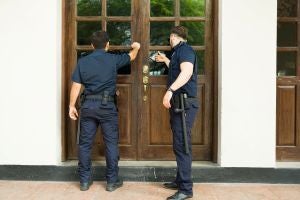
However, law enforcement sometimes overreaches its authority by violating what's known as "curtilage" - the area around your home that deserves the same protection as your house itself. When a curtilage violation is identified, the resulting evidence may be excluded from your case.
Simply put, the term "curtilage" refers to the land immediately surrounding and associated with a home, essentially extending the home's private space to areas like its backyard, carport, sheds, porches, and driveways.
Under the Fourth Amendment, curtilage is considered part of the home itself, offering a reasonable expectation of privacy. This understanding should provide a sense of security and reassurance to California residents.
Therefore, a curtilage violation in California typically occurs when law enforcement officers enter or search a home's curtilage without a warrant, permission, or a legally recognized exception. Such a warrantless intrusion can lead to the suppression of any evidence gathered because police officers generally need a warrant to enter or search a home's curtilage.
What Is Curtilage and How Does It Protect You?
As noted above, curtilage refers to the area immediately surrounding your home where you have a reasonable expectation of privacy. Under California law and federal constitutional protections, curtilage is treated as an extension of your home for Fourth Amendment purposes.

This means law enforcement cannot search or surveil this area without a valid warrant, just as they cannot enter your house without proper legal authority.
The curtilage doctrine stems from the principle that your home is your castle, and this protection extends beyond your four walls.
Courts consider several factors when determining curtilage boundaries: the proximity to your home, whether the area is enclosed, the nature of your use of the area, and the steps you've taken to protect the area from observation by passersby.
When police violate curtilage without a warrant or valid exception, they infringe upon your Fourth Amendment rights. This violation can render any evidence obtained inadmissible in court, potentially undermining the prosecution's entire case against you.
Key Takeaways
- Law enforcement officers often enter curtilage areas to make contact with persons at the home, conduct investigations, or apprehend suspects.
- The courts have held that under certain circumstances, the mere presence of a peace officer in the curtilage of a home could constitute a warrantless search, in violation of the Fourth Amendment.
- Generally, residents of a home expect limited access to their home by the public, such as neighbors, delivery persons, visitors, etc.
- The expected access does not include conduct intended to "search," but rather simple efforts taken just to "contact" the resident.
- If entry is made onto the curtilage of a home for the purpose of obtaining information, such as to see, smell, record activity on the property, by any means other than permissible "knock and talk" contact (a non-coercive, consensual conversation initiated by law enforcement), a warrant, consent, probation or parole requirements, or exigent circumstances must justify the entry.
- Certain areas, by their very nature, have a greater expectation of privacy. For instance, back yards almost always have a much higher privacy expectation than front yards.
What is an Example of a Curtilage Violation?
An example of a curtilage violation can be found in People v. Camacho, 23 Cal. 4th 824 (2000), wherein police officers were dispatched to a home regarding a complaint of loud noise late at night.

Rather than walking up to the front door, one of the officers walked into the side yard and looked through a window that was open a few inches. The police officer observed Camacho packaging cocaine.
The court ruled the entry into the side yard was an unlawful "search," noting that "most persons would be surprised, indeed startled, to look out their bedroom window at such an hour to find police officers standing in their yard looking back at them."
Law enforcement agencies sometimes push boundaries in their investigations, leading to constitutional violations that can be challenged in court. Let's examine a few common examples of these curtilage violations below.
Unauthorized Fence Peering and Window Observation
Police officers who peer over your backyard fence or look through your windows without a warrant may be violating your curtilage rights. Suppose you've taken reasonable steps to create privacy, such as installing a fence or positioning your windows away from public view. In that case, law enforcement cannot simply circumvent these barriers to observe your private activities.
California courts have consistently held that homeowners who erect privacy fences have a reasonable expectation that their backyard activities remain private. Officers who use ladders, elevated positions, or other methods to see over these barriers are conducting warrantless searches that violate the Fourth Amendment.
Aerial Surveillance of Enclosed Areas
While police can observe what's visible from public airspace, aerial surveillance becomes problematic when it involves enclosed or private areas around your home. Using helicopters, drones, or aircraft to peer into your enclosed backyard, patio, or other curtilage areas may constitute an illegal search.
Unauthorized Use of Drug-Sniffing Dogs
Bringing drug-detection dogs onto your property without a warrant represents a significant curtilage violation. The Supreme Court has ruled that using trained dogs to sniff around your home constitutes a search requiring a warrant. This protection extends to your curtilage areas, including driveways, porches, and yards.

Even if officers remain on what they claim is a public pathway, allowing a drug dog to investigate scents emanating from your property or to approach your home's immediate surroundings without a warrant violates your Fourth Amendment protections.
The U.S. Supreme Court recently held, in Florida v. Jardines, 133 S. Ct. 1409 (2013), that a K-9 sniff on a front porch was a "search" that required either a warrant or an exception to the warrant requirement, and in so doing, discussed the concept of "limited public access" to the home and its curtilage.
Warrantless Perimeter Searches
Law enforcement officers may sometimes attempt to conduct a "casually" search of the perimeter of a home or property. This includes examining outdoor items, looking into sheds or outbuildings, peering into windows, or investigating other areas where you maintain a reasonable expectation of privacy.
Simply claiming to be on a public sidewalk or easement doesn't give officers carte blanche to search or examine your property. The curtilage doctrine protects the immediate area around your home from such warrantless intrusions.
How a Criminal Defense Attorney Can Protect Your Rights
Left unaddressed, a curtilage violation may ultimately result in an unfair conviction based on evidence that was illegally obtained. A skilled California criminal defense attorney can identify curtilage violations and move to protect your rights by spotting constitutional violations others might miss.

Your attorney will carefully review how law enforcement gathered evidence, looking at police reports, surveillance footage, and officer testimony for signs of curtilage violations. They'll determine if officers had proper warrants, if exceptions applied, or if your privacy rights were violated.
If curtilage violations are found, your attorney can file a motion to suppress evidence obtained illegally. Under the exclusionary rule, such evidence cannot be used in court. This may lead to key evidence being thrown out, witness testimony excluded, or charges dismissed.
Without crucial evidence, prosecutors often face weakened cases, forcing them to reduce charges, offer more favorable plea deals, or drop the case altogether. For more information, contact our criminal defense law firm, Eisner Gorin LLP, located in Los Angeles, CA.
Related Content:
 If you have one phone call from jail, call us! If you are facing criminal charges,