
How to Handle a Parole Violation in California
Parole in California is a period of supervised release after an individual has served their term in state prison. Its purpose is to help former inmates transition back into society while under the supervision of the California Department of Corrections and Rehabilitation (CDCR).
Parole is usually standard after a prison term. The Parole Board will parole an inmate once they serve their sentence unless they are a risk to public safety. However, this period of supervision comes with strict conditions.
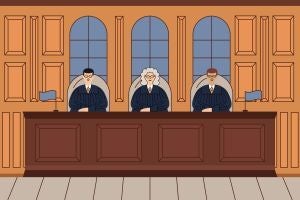
Understanding and adhering to these conditions is crucial, as a failure to do so can lead to serious consequences, including a return to custody.
If you violate any of the conditions, you could end up right back where you started-back in prison. This underscores the urgency of understanding and adhering to your parole conditions.
When facing an accusation of a parole violation, the most crucial initial step is to secure representation from an experienced California criminal defense attorney. The role of a skilled attorney in navigating this complex situation is pivotal and cannot be overstated.
They can significantly influence the outcome in your favor, providing you with the support and reassurance you need during this challenging time. Parole violations are not to be taken lightly. Your rights are more limited than if you were facing criminal charges outside the umbrella of parole.
In such a serious situation, the guidance of a skilled attorney who knows how to navigate this complex terrain is crucial to achieving the best possible outcome for you.
Understanding Parole in California
A former prison inmate, now on parole, is referred to as a "parolee." They must abide by the conditions and requirements set by the parole board. As noted, when an individual is released from prison on parole, they must agree to abide by a set of specific conditions.
These conditions are designed to ensure public safety and promote the parolee's successful reintegration. While terms can vary based on the original offense and the individual's history, standard conditions of parole often include:
- Obey all laws and commit no new crimes.
- Regularly reporting to a designated parole officer.
- Abstaining from the use or possession of illegal drugs and alcohol.
- Submitting to searches of your person, property, or residence by a parole officer.
- Consent to a search at any time, regardless of whether police have a warrant.
- Avoiding contact with victims or co-defendants from the original crime.
- Avoid associating with certain people, such as gangs.
- Not owning or possessing any firearms or dangerous weapons.
- Remaining within specified geographical limits unless granted permission to travel.
- Attending mandatory counseling, treatment programs, or employment services.
- Avoid using the internet without prior approval.
Common Parole Violations
A parole violation occurs when a parolee fails to comply with any of these mandated conditions. Violations generally fall into two categories: technical violations and new law violations.
- Technical Violations: These involve breaking one of the specific rules of parole that is not in itself a new crime. Examples include failing to report to a parole officer, missing a mandatory meeting, moving without permission, or failing a drug test.
- New Law Violations: This is the more serious type of violation and occurs when a parolee is arrested for and charged with a new criminal offense. Committing any new crime, from a minor misdemeanor to a serious felony, constitutes a violation of parole.
What Is a PC 3056 Parole Revocation Hearing?
Any parolee who violates a condition or term of parole can be sent back to California state prison for a year. However, they will have a parole revocation hearing (also known as a parole violation hearing). The purpose of the revocation hearing is to determine the following:
- Whether probable cause exists that you violated a term of the parole or a new law,
- Whether revocation of parole is appropriate in light of the violation.
You have an opportunity to argue that you didn't violate parole or that any violation was too minor to warrant revocation.
As a parolee, you have certain due process rights, such as the right to a written notice of your alleged violation and the opportunity to present evidence and be represented by an attorney.
What Happens at a Revocation Hearing?
This hearing is held either before the deputy commission or the entire parole board. Evidence against you will probably consist of an officer who arrested you, your parole officer, or any witnesses.
You can also present evidence on your behalf. Your attorney can cross-examine any witnesses testifying against you and have your witnesses testify.
The proof of a parole violation that the prosecutor must show is lower in a parole revocation hearing than it was for your criminal trial, which is proof beyond a reasonable doubt.
By contrast, the standard in a parole revocation hearing is a preponderance of the evidence. Essentially, this means it is more likely than not that you violated your parole.
If it's determined that you violated parole, you can go back to jail for up to one year. If you broke a new law, rather than simply violating a condition of parole, the state could also bring new criminal charges against you.
If you win the PC 3056 revocation hearing, then you continue with your parole with no further allegations against you.
What Happens When Parole Is Violated?
When a parole officer suspects a violation, they can take various actions. For minor infractions, a warning or additional sanctions, such as electronic monitoring or mandatory treatment, may be imposed. However, for serious or repeated violations, the officer can request a warrant for your arrest.

If you are arrested, you will be held without bail until a parole revocation hearing. Unlike a jury trial, a judge will preside over your case at a parole violation hearing.
At the hearing, the CDCR must prove you violated your parole terms. As noted above, the standard of proof is a "preponderance of the evidence," meaning the judge only needs to believe it's more likely than not that the violation occurred.
If you are found in violation, the judge can impose penalties ranging from stricter parole conditions to revoking parole and sending you back to prison for up to one year per violation.
Strategies for Defending Against a Parole Violation
While parole violations are serious and the risk of reincarceration is high, a skilled California criminal defense attorney can still evaluate the specifics of your case and develop a tailored strategy either to help you avoid imprisonment or minimize the penalties. Common approaches include:
- Challenging the Evidence: Your attorney can scrutinize the evidence presented by the parole officer. This may involve questioning the validity of a drug test, arguing that a search was conducted improperly, or demonstrating that there is insufficient evidence to prove you committed the alleged violation.
- Presenting Mitigating Circumstances: Even if the evidence of a violation is strong, your attorney can present mitigating factors to argue for a less severe outcome. For example, if you missed a meeting due to a documented medical emergency or family crisis, this information can persuade the judge to reinstate parole rather than revoke it.
- Negotiating an Alternative Resolution: An attorney can often negotiate directly with the parole officer or the hearing officer before the formal hearing. They may be able to arrange an alternative sanction, such as placement in a residential treatment program or stricter supervision, in lieu of a return to custody.
- Demonstrating Your Progress: A strong defense often involves highlighting the positive steps you have taken since being released. Evidence of stable employment, consistent attendance at treatment programs, and strong community ties can show the judge that you remain a good candidate for continued supervision in the community.
At Eisner Gorin LLP, we are a team of experienced California parole violations attorneys who can defend your freedom. It is possible to avoid prison when you violate parole, but you need the help of a seasoned advocate. Contact our law firm for more information. We are located in Los Angeles, CA.
 If you have one phone call from jail, call us! If you are facing criminal charges,