
California Penal Code 3056 PC: Awaiting Parole Revocation Hearings
When an individual is released on parole in California, their freedom is conditional. A single mistake—whether it is a minor procedural oversight or a new arrest—can trigger immediate detention.
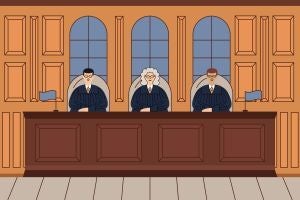
Under Penal Code Section 3056 PC, the state has the authority to place a "parole hold" on an individual and detain them while they await a formal parole revocation hearing.
If you or a loved one is currently facing a PC 3056 hold, navigating the rules of detention, your due process rights, and potential outcomes is essential to protecting your future.
Quick Reference Summary Chart: PC 3056
|
Feature of PC 3056 |
Statutory Details & Rights |
| Primary Function | Authorizes county detention of a parolee suspected of violating parole terms. |
| Bail Availability | Generally, no bail is permitted on a standard PC 3056 parole hold. |
| Maximum Detention Pending Hearing | A final revocation hearing must generally be held within 35 calendar days of the hold. |
| Standard of Proof at Hearing | Preponderance of the evidence (more likely true than not), which is much lower than "beyond a reasonable doubt". |
| Maximum Custody Sanction | Up to 180 days in county jail per revocation violation. |
| Time-Served Credit | All days spent in county custody under the hold count as credit toward the final sanction. |
What is a PC 3056 Parole Hold?
Penal Code 3056 PC governs the legal custody and housing of parolees who are accused of violating their parole conditions. When a parole agent or law enforcement officer has probable cause to believe a violation occurred, they can issue a parole hold.
A parole hold essentially freezes the individual in custody. Unlike a standard criminal arrest, parole holds are typically non-bailable, meaning the parolee cannot pay money to be released while waiting for their hearing.
Who Has Jurisdiction During the Hold?
Standard parole is supervised by the California Department of Corrections and Rehabilitation (CDCR), but PC 3056 changes the legal custody during a hold.
-
Sole County Authority: Once detained under PC 3056, the parolee transitions to the sole legal custody and jurisdiction of the local county.
-
Where Are They Housed? The parolee must be kept in the county jail from where they were arrested or where the petition to revoke parole was officially filed.
-
Alternative Custody: The law permits county correctional administrators to house parolees outside traditional jail cells through alternative programs like electronic monitoring (GPS ankle monitors) or work furlough.
Common Actions That Trigger a PC 3056 Arrest
Parole violations are broadly categorized into two types, both of which can result in a PC 3056 hold:
-
Technical Violations: Breaking administrative rules that do not constitute criminal acts includes actions like missing a scheduled parole officer meeting, traveling outside California without approval, relocating without informing authorities, or violating an automated curfew.
-
New Criminal Offenses (New Law Violations): Being arrested for a completely new crime, whether a misdemeanor like a DUI or a serious felony, involves two distinct challenges: defending against the new criminal charges in court and facing the parole revocation process.
Your Due Process Rights & The Revocation Hearing
Because a parole revocation can result in the loss of liberty, parolees are safeguarded by specific constitutional due process rights. You are not automatically returned to custody without a chance to contest the allegations.
At a PC 3056 revocation hearing, you have the right to:
-
Written Notice: Obtain a formal written statement specifying the parole conditions you are accused of violating.
-
Legal Representation: Be represented by a retained private defense lawyer or an appointed public defender.
-
Present Evidence: Introduce documentation, call witnesses, and present mitigating evidence to explain your actions.
-
Confront Witnesses: Cross-examine any adverse witnesses or officers who testify against you.
Crucial Nuance: A parole revocation hearing does not involve a jury. Instead, a judge or a deputy commissioner from the Board of Parole Hearings (BPH) oversees the proceedings and determines whether a violation took place, using the simplified "preponderance of the evidence" standard.
Frequently Asked Questions
Can a judge release someone on a PC 3056 hold before the hearing?
Yes. While parole holds are traditionally non-bailable, California law allows a superior court judge to override a hold once a formal petition for revocation is filed.
The court has the discretion to release the parolee on their own recognizance or set alternative terms and conditions pending the final hearing.
What is "flash incarceration"?
Flash incarceration is a tool parole agents use for minor, intermediate violations. It allows authorities to place a parolee in county jail for a brief period—typically 1 to 10 days—without triggering a formal, lengthy court revocation process.
What happens if the judge finds me in violation?
If the judge determines you violated parole, they have several options.
They can reinstate your parole with the exact same terms, modify your terms to add stricter conditions (like mandatory substance abuse counseling or tighter curfews), or revoke your parole and sentence you to serve up to 180 days in county jail.
Do I get credit for the time I spend waiting in jail?
Yes. Any days you spend confined in a county facility under a PC 3056 hold while awaiting your final revocation hearing will be fully credited against whatever jail sentence the judge hands down.
Strategic Legal Defenses to Fight Revocation
A skilled criminal defense attorney at Eisner Gorin LLP can employ several strategies to beat a parole hold or minimize its impact.
We can argue a mistake of fact (showing you did not actually violate the rule), prove a lack of willfulness (such as missing an appointment due to a verified, documented medical emergency), or challenge the reliability and constitutional validity of the state's evidence.
Schedule your consultation by calling (818) 781-1570 or by using the contact form.
 If you have one phone call from jail, call us! If you are facing criminal charges,