
California Health and Safety Code 11383 HS: Possession of Chemicals to Manufacture PCP
In California, manufacturing illegal narcotics carries severe penalties under state law, but prosecutors do not need to catch a suspect in the middle of active drug production to secure a major felony conviction.
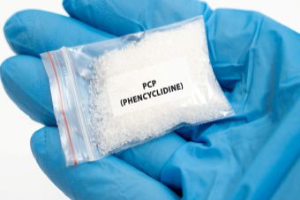
Under California Health and Safety Code 11383 HS, it is a standalone felony offense to possess specific chemical combinations or precursor materials with the intent to manufacture phencyclidine (PCP) or any of its analogs.
Because PCP production involves volatile and hazardous chemicals, law enforcement agencies and specialized narcotics task forces aggressively investigate and prosecute precursor possession long before a finished drug product is created.
Legal Definition of Health & Safety Code 11383 HS
California law formally defines the crime of possessing precursors to manufacture phencyclidine under Health and Safety Code 11383 HS as follows:
“Any person who possesses both piperidine and cyclohexanone at the same time, or any combination of morpholine and cyclohexanone, or pyrrolidine and cyclohexanone, with the intent to manufacture phencyclidine (PCP) or any of its analogs... is guilty of a felony and shall be punished by imprisonment in the state prison...”
“Any person who possesses immediate precursors sufficient for the manufacture of piperidine, morpholine, or pyrrolidine, or who possesses essential chemicals sufficient to manufacture cyclohexanone, with the intent to manufacture phencyclidine... is guilty of a felony...”
To establish guilt under HS 11383, prosecutors must prove beyond a reasonable doubt two essential legal elements:
-
The defendant possessed specific precursor chemicals (such as piperidine, pyrrolidine, morpholine, or cyclohexanone) or their immediate precursor compounds.
-
The defendant possessed these chemicals with the specific intent to manufacture PCP or its chemical analogs.
(Note: Related precursor laws for manufacturing methamphetamine or N-ethylamphetamine are codified under California Health and Safety Code 11383.5 HS).
Penalties for HS 11383 Convictions
A violation of Health and Safety Code 11383 HS is a straight felony offense in California.
It cannot be reduced to a misdemeanor. Under California Penal Code 1170(h) realignment guidelines, defendants convicted of HS 11383 face statutory prison sentences served in California State Prison or local county jail:
-
Statutory Prison Term: 2, 4, or 6 years in custody per count.
-
Maximum Fines: Criminal fines up to $10,000 plus penalty assessments.
-
Formal Probation: Formal felony probation may be granted in limited cases and requires court monitoring, chemical testing, and potential local jail time as conditions.
-
Collateral Consequences: Permanent loss of firearm rights (California Penal Code 29800), severe professional licensing discipline, mandatory drug registry requirements where applicable, and adverse immigration consequences for non-citizens (as an aggravated felony/controlled substance offense).
Penalty & Offense Summary Chart
|
Charge / Code Section |
Custody and Fine |
Probation Eligible? |
| Possession of PCP Precursors (HS 11383) |
2, 4, or 6 Years. Up to $10,000 |
Yes (Formal Felony Probation) |
| Possession of Meth Precursors (HS 11383.5) |
2, 4, or 6 Years. Up to $10,000 |
Yes (Formal Felony Probation) |
| Manufacturing Controlled Substances (HS 11379.6) |
3, 5, or 7 Years. Up to $50,000 |
Restricted |
Key Defense Strategies against HS 11383 Charges
-
Lack of Specific Intent to Manufacture: Possessing listed industrial chemicals is not illegal by itself unless prosecutors can prove a specific intent to produce PCP. Demonstrating that chemicals were intended for legitimate industrial, commercial, or cleaning purposes defeats the charge.
-
Illegal Search and Seizure (4th Amendment): Narcotics operations often rely on search warrants or on warrantless searches of vehicles or property. Defense attorneys can file a Motion to Suppress Evidence under Penal Code 1538.5 if officers lacked probable cause or exceeded the scope of the search warrant.
-
Lack of Possession or Control: Prosecutors must prove actual or constructive control over the precursors. Being a roommate, passenger, or visitor in a residence or storage facility where precursors are stored is insufficient to establish possession.
-
Chemical Identification Defenses: Independent chemical analysis can challenge whether the seized materials actually match the specific chemical compounds defined under HS 11383.
Hypothetical Examples
-
Commercial Chemical Storage: An industrial worker stores sealed drums of piperidine and cyclohexanone at a residential workshop for an authorized solvent business; because no equipment or intent to make PCP exists, criminal charges are unproven.
-
Illicit Precursor Purchase: A suspect purchases listed precursor chemicals, along with lab glass tubing and extraction equipment, from an undercover informant; police arrest the buyer and charge them with violating HS 11383 based on circumstantial evidence of intent.
-
Constructive Possession Defense: Law enforcement executes a search warrant on an outbuilding rented by a primary tenant and finds precursor compounds; a guest staying on the property successfully argues lack of knowledge or constructive possession over the materials.
Related California Laws
Understanding related statutes is critical because prosecutors rarely charge HS 11383 in isolation.
When precursor chemicals are discovered, district attorneys routinely stack charges—combining precursor possession with active manufacturing (HS 11379.6) and conspiracy (PC 182).
These stacked felony counts exponentially increase prison exposure, making it essential for defense strategies to target both the base charges and overlapping counts simultaneously. The related laws include:
-
HS 11379.6 (Manufacturing Controlled Substances): Makes it a felony to actively compound, derive, process, or manufacture illegal narcotics like PCP or methamphetamine.
-
HS 11383.5 (Possession of Methamphetamine Precursors): Prohibits possessing precursor chemicals (such as ephedrine, pseudoephedrine, or hydriodic acid) with intent to manufacture methamphetamine.
-
HS 11377 (Possession of Methamphetamine/PCP): Prohibits simple personal possession of completed schedule II controlled substances.
-
HS 11378 (Possession for Sale of Non-Narcotic Controlled Substances): Makes it a felony to possess finished PCP or methamphetamine with the intent to sell.
-
PC 182 (Criminal Conspiracy): Criminalizes agreements between two or more people to commit a crime, frequently charged in multi-person lab operations.
Frequently Asked Questions (FAQs)
Is simple possession of precursor chemicals an automatic felony under HS 11383?
No. Possession of listed precursor chemicals is only a felony if prosecutors prove beyond a reasonable doubt that you had the specific intent to use those materials to manufacture PCP or its analogs.
What specific chemicals are covered under California Health and Safety Code 11383?
HS 11383 specifically covers combinations involving piperidine and cyclohexanone, morpholine and cyclohexanone, or pyrrolidine and cyclohexanone, as well as their immediate precursors.
Can I be charged under HS 11383 if no finished PCP was found?
Yes. HS 11383 targets the precursor materials needed to create PCP, allowing law enforcement to arrest and prosecute individuals before any finished drug is actually produced.
What is the maximum prison sentence for an HS 11383 precursor conviction?
A conviction for possessing PCP precursors under HS 11383 carries a state prison term of 2, 4, or 6 years, along with fines of up to $10,000.
How do prosecutors attempt to prove "intent to manufacture"?
Prosecutors use circumstantial evidence to allege intent, including laboratory glassware, heating elements, chemical recipes, scales, protective gear, large quantities of chemicals, or suspicious messaging.
Can HS 11383 charges be reduced to a misdemeanor?
No. Health and Safety Code 11383 HS is a straight felony in California and cannot be filed or reduced as a misdemeanor.
What is the difference between HS 11383 and HS 11383.5?
HS 11383 governs precursor chemicals used specifically to manufacture phencyclidine (PCP), whereas HS 11383.5 applies to precursors used to manufacture methamphetamine or N-ethylamphetamine.
How can an attorney defend against precursor possession charges?
A defense attorney can challenge whether you had actual control over the chemicals and demonstrate a legitimate commercial or personal use to defeat intent.
Your best chance of a positive outcome is to work with an experienced California criminal defense attorney at Eisner Gorin LLP. To schedule a consultation, call (818) 781-1570 or use the contact form.
 If you have one phone call from jail, call us! If you are facing criminal charges,