
In California, felony charges are brought against an individual in one of two ways: through a preliminary hearing or by a grand jury. Both processes are designed to determine whether there is probable cause to bring felony charges against you.
However, the two processes are quite different from each other, as is your defense attorney's role in each process.
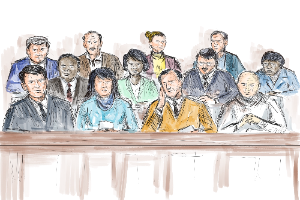
Under California law, a grand jury refers to a group of citizens convened to determine whether charges should be brought against a potential defendant in certain criminal cases.
A preliminary hearing, by contrast, is a proceeding held before a judge in which the judge determines whether there is enough evidence in a criminal case to require a criminal trial.
Grand juries and preliminary hearings are similar in that they are both used in relation to felony cases. In California, all felony charges are brought in one of two ways.
These include information filed by the district attorney after a preliminary hearing, or an indictment brought by a grand jury.
Regarding misdemeanor charges, California's criminal laws require that, after an arrest, the accused appear at an arraignment to hear the specific charges filed against them and enter a plea.
Understanding the key differences in these proceedings is crucial. It empowers you to make informed choices regarding your defense in these early stages of a criminal case.
The Core Principle of Probable Cause
At their heart, both the grand jury and preliminary hearing processes aim to determine whether there is sufficient evidence (known as probable cause) to justify proceeding with felony charges.

Probable cause means there is enough evidence to lead a reasonable person to believe that a crime was committed and that the accused is responsible for it. This legal threshold protects individuals from being subjected to baseless criminal trials and ensures that cases proceed only where there is a genuine basis for charges.
While the ultimate goal of the two processes is the same, the way they operate and the circumstances under which they are used differ significantly.
Simply put, probable cause is a state of facts as would lead a man of ordinary care and prudence to believe and conscientiously entertain an honest and strong suspicion that the person is guilty of a crime.
What is a Grand Jury Proceeding?
A grand jury is a body composed of a specified number of citizens from a particular county, whose role is to determine whether felony charges should be brought against a potential defendant in a criminal case.

A grand jury proceeding is held before the defendant appears for an arraignment, which is the initial appearance in the California criminal court process.
Grand jury proceedings differ from a trial jury that one finds in a California criminal jury trial. Whereas a jury trial decides whether the defendant is guilty or innocent, the grand jury's job is just to determine whether there is probable cause to believe that the defendant may have committed an alleged crime.
If a grand jury finds probable cause, then it issues an indictment referred to as a "grand jury indictment," that charges the suspect with the crime in question.
What is a Preliminary Hearing?
In California, after a prosecutor files a felony complaint with the court, the law requires the judge to hold a preliminary hearing, referred to as a "prelim" or probable cause hearing.

The purpose of the preliminary hearing is to determine if there is enough evidence to justify holding the defendant to answer for the alleged criminal charges.
During the hearing, the prosecutor presents evidence and witnesses, who are subject to cross-examination by the defense attorney or public defender.
During the hearing, the judge determines whether there is sufficient evidence to believe that a crime was committed, and if so, whether there is enough probable cause to believe that the defendant is the person who committed that crime.
However, the burden of proof in a California preliminary hearing is only probable cause. Let's examine the key differences between a grand jury and a preliminary hearing below.
Public vs. Private Proceedings
One of the most significant differences between a grand jury and a preliminary hearing is the level of transparency.
- Grand Jury: This is a private process. The grand jury is made up of a group of citizens tasked with reviewing evidence presented solely by the prosecutor. Defendants and their attorneys generally do not participate in grand jury proceedings, and the process involves no cross-examination of witnesses. This secrecy is intended to protect the reputations of individuals who may ultimately not be charged, as well as to safeguard witnesses and the integrity of ongoing investigations.
- Preliminary Hearing: Unlike grand jury proceedings, preliminary hearings are public. They are conducted before a judge, and both the prosecution and defense participate. The prosecutor presents evidence and witnesses, and the defense has the opportunity to cross-examine witnesses and challenge the evidence presented. This balanced and adversarial process, overseen by a judge, ensures that the decision on probable cause is fair and just.
Timing in the Legal Process
- Grand Jury: A grand jury proceeding occurs before formal charges are brought against the defendant. If the grand jury finds probable cause, it issues an indictment, which formally charges the defendant with one or more crimes.
- Preliminary Hearing: This takes place after the filing of a complaint against the defendant in court. Once the charges are filed, the court schedules a preliminary hearing to determine if the case should proceed to trial.
Decision-Makers
- Grand Jury: The decision to indict rests with the panel of citizens in the grand jury. These individuals weigh the evidence presented by the prosecutor and vote to decide whether the case meets the threshold of probable cause.
- Preliminary Hearing: Here, the judge plays the role of the decision-maker. The judge evaluates the evidence, considers the arguments from both the prosecution and the defense, and determines whether the case should proceed to trial or be dismissed.
Involvement of the Defense
- Grand Jury: Since the grand jury only hears from the prosecutor, it is a one-sided presentation. The prosecutor controls the narrative, deciding which evidence to present and which witnesses to call.
- Preliminary Hearing: There is a more balanced presentation of evidence during a preliminary hearing. The defense plays a crucial role, challenging the prosecution's evidence, presenting its arguments, and cross-examining prosecution witnesses. This active involvement ensures that your perspective is heard and taken into consideration.
When Is Each Used in California?
California law allows for felony charges to be initiated either through a grand jury indictment or after a preliminary hearing. However, the two processes are not used equally and are often employed in specific scenarios.
Most felony charges in California are initiated through preliminary hearings. This process is more common because it aligns with the public's interest in transparency and fairness and allows for thorough legal scrutiny of charges before proceeding to trial.
Grand juries are far less common in California state courts and are generally reserved for cases with unique circumstances, such as:
- High-Profile or Sensitive Cases: Cases involving significant public interest, such as those against public officials or high-profile defendants, are often routed through grand juries to ensure confidentiality.
- Cases with Vulnerable Witnesses: When children or other vulnerable witnesses are involved, a grand jury can spare them from having to testify under the pressure of cross-examination in a public courtroom.
- Testing Weak Cases: Prosecutors may prefer a grand jury to gauge the strength of their case before proceeding with charges.
For additional information, contact our criminal defense law firm, Eisner Gorin LLP, located in Los Angeles, CA.
Related Content:

 If you have one phone call from jail, call us! If you are facing criminal charges,