
Long Beach White Collar Crimes Lawyer
A "white collar crime" is a non-violent, financially motivated offense committed by individuals, business professionals, or government officials. These crimes are characterized by deceit, concealment, or a violation of trust rather than the application of physical force.

White collar crimes in Long Beach are often prosecuted to the fullest extent of the law, as local law enforcement and state prosecutors pursue these charges with significant resources.
Although white collar offenses are nonviolent, the punishments of a conviction can still be severe and have significant impacts on different areas of your life. White-collar crimes can be charged as federal or state crimes in California, depending on the circumstances.
Depending on the severity of the offense, you may face years behind bars and large fines. For example, a conviction for mail or wire fraud could result in up to 20 years in prison and a fine of up to $250,000.
Possible Severe Consequences
In today's divisive political environment, what once was innocent political fundraising now raises the specter of political corruption, bribery of elected officials, and solicitation.

Whether you are an elected official, a political activist, or a contributor, if your conduct is under investigation or if you are facing public corruption charges, you need the expertise of a seasoned Long Beach criminal defense lawyer to protect your rights.
Whether the alleged offense occurred in downtown Long Beach, Belmont Heights, or Bixby Knolls, being charged with a white collar or theft crime can have severe consequences for your reputation, career, and freedom.
A conviction can easily result in lengthy prison sentences and fines that can reach into the millions of dollars, depending on the offense. The severity of these consequences underscores the urgent need for professional legal help.
Given the complexity of these cases and the potentially significant penalties, it's crucial to hire a skilled defense attorney with specific experience in white collar criminal cases. This is in your best interest and can greatly impact the outcome of your case.
While numerous offenses fall under the category of white-collar crimes, a few are prosecuted more frequently in the Long Beach Superior Court than others. Here are just a few examples.
Forgery (Penal Code 470 PC)
Forgery involves knowingly creating, altering, or using a written document with the intent to defraud. This can include signing another person's name, falsifying a legal document such as a property deed or check, or altering parts of a valid document.
A prosecutor must prove you acted with specific intent to commit fraud, meaning your goal was to deceive someone to cause a loss or gain an unfair advantage.
Embezzlement (Penal Code 503 PC)
Embezzlement occurs when an individual fraudulently appropriates property that was entrusted to them by someone else. This crime is fundamentally a breach of trust.
A common example is a payroll manager in a Bixby Knolls office who diverts company funds into their personal account. The key elements are the existence of a relationship of trust and the fraudulent conversion of property for personal use.
Grand Theft (Penal Code 487 PC)
Grand theft is the unlawful taking of property belonging to someone else when the value of that property exceeds $950. In a white-collar context, this often occurs through theft by false pretenses, such as convincing an investor in Naples to fund a nonexistent business venture.
It can also apply to the theft of certain types of property, such as an automobile or firearm, regardless of their value.
Identity Theft (Penal Code 530.5 PC)
Under California law, identity theft occurs when someone intentionally uses another person's personal identifying information, such as Social Security numbers or credit card details, without consent, to commit fraud or other crimes.
Pursuant to Penal Code 530.5, it can be charged as a misdemeanor or felony, with penalties that include fines, imprisonment, and restitution to victims.
Money Laundering (Penal Code 186.10 PC)
Money laundering involves concealing or "cleaning" money obtained from illegal activities, typically by using it in financial transactions designed to hide the source of illicit funds. This crime is often linked to larger schemes, such as fraud or drug trafficking.

Money laundering, as defined in Penal Code 186.10, is classified as a felony in California. Conviction can result in up to four years in state prison, significant fines, and potential asset forfeiture.
The penalties may be enhanced if the amount laundered exceeds specific thresholds or if a pattern of related activity is detected.
Simply put, PC 186.10 defines the crime of money laundering, which involves engaging in financial transactions with the intent to conceal the origin or ownership of funds derived from criminal activity, to facilitate future illegal acts, or to promote the criminal activity itself.
Fraudulent Insurance Claims (Penal Code 550 PC)
California Penal Code 550 PC makes it a crime if you knowingly present, or cause to be presented, any false claim for the payment of a loss or injury, including payment of a loss or injury under a contract of insurance.
A conviction is a felony punishable by up to five years in jail. Common examples of insurance fraud include:
- Exaggerating the extent of your injuries
- Presenting multiple claims for the same loss
- Staging an accident while engaging in a scheme to defraud an auto insurer
- Altering the receipts or inflating the costs of repairs
- Presenting false information to an auto insurer in support of a claim
- Making false statements in the submission of a claim.
This broad category covers numerous acts intended to defraud an insurance company. Common examples include staging a car accident, filing a false claim for property damage after a storm, or a medical provider billing for services never rendered.
California law prohibits knowingly presenting a false claim for payment, submitting multiple claims for the same loss, or conspiring with others to commit these acts.
Other Types of White Collar Crimes
- Credit card fraud
- Mortgage fraud
- Check fraud
- Bribery
- Healthcare fraud
- Bank fraud
- Wire fraud
- Securities fraud
- Tax Evasion
- Insider trading
- Public corruption
- Campaign finance violations
- Criminal copyright infringement
Enforcement for White Collar Theft Crimes
Unless the crime in question falls under federal jurisdiction, most white collar crimes committed in Long Beach are investigated by local law enforcement agencies and prosecuted in state courts.
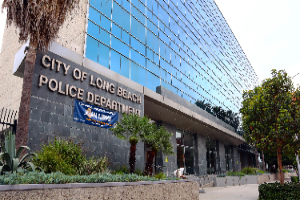
The Long Beach Police Department has dedicated economic crime detectives who investigate complex financial allegations.
They gather evidence, interview witnesses, and work closely with the Los Angeles County District Attorney's Office.
Once charges are filed, the case proceeds through the California state court system, typically at the Governor George Deukmejian Courthouse in Long Beach.
These cases often involve extensive documentary evidence, such as bank records, emails, and contracts, requiring a meticulous approach from all parties.
Police Departments in Los Angeles County
- Los Angeles Police Department
- Los Angeles County Sheriff's Department
- Long Beach Police Department
- Glendale Police Department
- Pasadena Police Department
- Beverly Hills Police Department
- Burbank Police Department
- Culver City Police Department
- San Marino Police Department
- Torrance Police Department
Defending Against White Collar Criminal Charges in Long Beach
A conviction for a white collar crime can lead to significant jail or prison time, substantial fines, and restitution orders. A strong defense is crucial. A Long Beach criminal defense lawyer might explore several strategies, depending on the specifics of the case. Common defenses include:
- Lack of Intent: Many white-collar crimes require proving you acted with intent to defraud. A common defense is to show that your actions were mistakes or a result of poor judgment, rather than intentional fraud. For instance, evidence might reveal a bookkeeping error, not embezzlement.
- Insufficient Evidence: A defense attorney will analyze documents and witness statements being used as evidence against you for weaknesses. If the evidence is circumstantial or doesn't meet the "beyond a reasonable doubt" standard, an acquittal may be possible.
- Entrapment: This defense argues that law enforcement induced you to commit a crime you wouldn't have otherwise committed. It claims the government's actions, not your intent, offended.
- Duress or Coercion: In some cases, a defendant may act illegally due to direct threats of harm. This defense asserts that the act wasn't done voluntarily but to avoid immediate danger to themselves or their family.
Our law firm defends clients against white collar crime allegations in Long Beach and the surrounding cities of Signal Hill, Seal Beach, Rossmoor, Carson, West Carson, Lakewood, Lomita, Los Alamitos, Hawaiian Gardens, Paramount, Compton, Bellflower, Artesia, Torrance, and Cypress.
Contact Eisner Gorin LLP for a confidential consultation and a clear plan to protect your freedom and future.
By appointment, the law firm may meet the client at 100 Oceangate, Suite 1200, Long Beach, CA 90802 for case preparation, strategy, and review.
 If you have one phone call from jail, call us! If you are facing criminal charges,