
Under California criminal law, property owners and industrial operators have specific statutory protections against unauthorized entry.
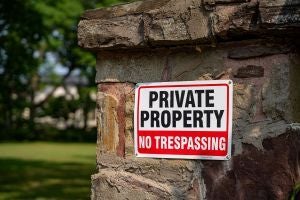
California Penal Code 555 (PC 555) makes it a criminal offense to enter or remain on designated, sign-posted property without first obtaining written permission from the property owner, legal tenant, or authorized occupant.
Whether you are facing misdemeanor trespass charges, defending against an unlawful entry citation, or evaluating real estate entry boundaries in California, this guide provides a complete legal breakdown of PC 555, potential criminal penalties, viable defense strategies, and related statutes.
What Is the Legal Definition of PC 555?
California Penal Code 555 PC prohibits entering or remaining upon any posted property without explicit written authorization from the person or entity in legal control of the land.
“It is unlawful to enter or remain upon any posted property without the written permission of the owner, tenant, or occupant in legal possession or control thereof. Every person who enters or remains upon posted property without such written permission is guilty of a separate offense for each day during any portion of which he enters or remains upon such posted property.”
Key Statutory Definitions Under PC 555
To understand how PC 555 is interpreted in court, key statutory terms must be clearly defined:
-
Posted Property: Real property, land, or industrial facilities equipped with clearly visible "No Trespassing" signs posted along boundaries, entry points, or fence lines in compliance with California legal posting requirements.
-
Written Permission: Formal, documented authorization signed by the property owner, tenant, or legal occupant explicitly allowing access to the property. Verbal consent does not fulfill the statutory requirement for posted property.
-
Separate Offense Per Day: Under Penal Code 555, every single day or portion of a day that a person remains on posted property constitutes a distinct criminal charge.
What Must the Prosecution Prove to Convict You Under PC 551 vs. PC 555?
To secure a criminal conviction under California Penal Code 555 PC, prosecutors must establish each of the following elements beyond a reasonable doubt:
-
Lawful Posting of Property: The land, facility, or building was legally designated as "posted property" with compliant signage along its perimeter.
-
Unauthorized Entry or Presence: You physically entered or remained on the posted property.
-
Lack of Written Permission: You did not have valid written permission from the property owner, legal tenant, or authorized occupant at the time of entry.
-
Willful Conduct: You intentionally entered or stayed on the premises rather than doing so under duress or accidental physical displacement.
What Are the Penalties for a PC 555 PC Conviction?
A violation of Penal Code 555 PC is classified as a misdemeanor in California.
Misdemeanor Penalties
-
Up to 6 months (180 days) in county jail per count
-
A maximum fine of up to $1,000 plus court fees
-
Informal (Summary) Probation for up to 1 to 3 years
-
Restitution for any physical damage caused to the property or surrounding structure
Compounding Daily Charges
Because PC 555 treats each day on posted property as a separate count, remaining on the property over multiple days drastically increases cumulative jail time and total fines.
Summary Comparison: California Trespass & Property Offenses
|
Statute |
Offense Overview |
Maximum Sentence |
| Penal Code 555 PC | Entering or remaining on posted property without written permission | Misdemeanor: Up to 6 months in county jail; fine up to $1,000 per daily count |
| Penal Code 602 PC | General criminal trespass (entering private property without consent) | Infraction or Misdemeanor: Up to 6 months in jail; fine up to $1,000 |
| Penal Code 602.8 PC | Trespassing on fenced or posted land (civil/infraction trespass) | Infraction: Fine of $75 for first offense; $225 for second offense |
What Defense Strategies Can Be Used Against PC 555 Charges?
An experienced California criminal defense attorney can utilize several proven defense strategies to fight charges under PC 555:
1. Valid Written Permission
If you possessed written authorization from the property owner, lessee, or legal occupant at the time of entry, you cannot be convicted under PC 555 PC.
2. Inadequate or Improper Signage
If "No Trespassing" signs were missing, obscured, fallen, or failed to meet statutory posting guidelines regarding font size, spacing, or boundary location, the land does not legally qualify as "posted property" under PC 555.
3. Necessity or Emergency
If you entered the posted property to avoid imminent bodily harm, seek emergency shelter during a natural disaster, or assist someone in extreme distress, your legal counsel can assert a necessity defense.
4. Labor Activity Exemption
California law provides specific protections for lawful labor activities, union organizing, or land surveys conducted under statutory mandate. Entrants participating in protected concerted activities cannot be prosecuted under standard trespass statutes.
Hypothetical Example: Understanding PC 555 in Action
Scenario:
Jordan, an avid drone photographer, spots an abandoned industrial facility surrounded by a chain-link fence. The fence features faded, partially illegible signs facing away from the main road. Wanting aerial footage, Jordan cuts through an unlatched gate and camps inside the compound for two days without seeking permission.
Legal Outcome:
Property security discovers Jordan on the second day and calls local law enforcement. Jordan is arrested and charged with two counts of misdemeanor trespass under Penal Code 555 PC (one count for each day on the premises).
Defense Approach:
Jordan's defense lawyer reviews police photos and demonstrates that the perimeter signage was defective, non-compliant, and unreadable from the entry point. Because the property failed to meet statutory posting standards, the prosecutor agrees to reduce the misdemeanor charges to a single non-criminal infraction with a minor fine.
What Are Related Property and Trespass Statutes Under California Law?
Understanding related statutes matters because prosecutors frequently evaluate property boundaries, intent, and damage to select between civil infractions, simple misdemeanors, or aggravated felony trespass charges.
-
Penal Code 602 PC – General Criminal Trespass: This law matters because it covers a broader range of unauthorized entries onto private property, including refusing to leave after being requested to do so by an owner or peace officer.
-
Penal Code 602.8 PC – Infraction Trespass on Fenced or Posted Land: This statute matters because it allows law enforcement to issue low-level civil infraction citations rather than misdemeanor arrest charges for minor land boundary violations.
-
Penal Code 601 PC – Aggravated Trespass: This crime matters because entering property within 30 days of making a credible threat against the owner elevates trespass to a severe "wobbler" felony carrying up to 3 years in state prison.
-
Penal Code 594 PC – Vandalism: This statute matters because prosecutors frequently add vandalism charges alongside PC 555 if property gates, fences, or signs are defaced or damaged during an entry.
-
Penal Code 459 PC – Burglary: This law matters because entering posted property with the specific intent to commit theft or any felony inside escalates the offense to commercial or residential burglary charges.
Frequently Asked Questions (FAQs)
Is PC 555 PC always charged as a misdemeanor?
Yes. A charge under California Penal Code 555 PC is a misdemeanor offense punishable by up to 6 months in county jail per count. However, minor initial boundary infractions are sometimes negotiated down to non-criminal infractions under PC 602.8.
Is verbal permission enough to defend against a PC 555 charge?
No. Unlike standard criminal trespass under PC 602, PC 555 specifically requires written permission from the owner, tenant, or occupant. Documented proof is vital to establishing a complete defense.
How many "No Trespassing" signs must be posted for a property to be legally posted?
Under California posting standards, signs must be displayed at all normal entry points and along property boundaries at intervals required by law (typically at least three signs per mile and at every vehicle or foot entrance) to give clear legal notice.
What happens if I remain on posted property for multiple days?
Under PC 555, every day or partial day spent on posted property is filed as a separate criminal charge. Spending three consecutive days on posted land can result in three separate misdemeanor counts, each carrying up to 18 months in jail.
Can I expunge a PC 555 conviction from my criminal record?
Yes. Once you complete your probation or jail sentence and pay all court fines, you can petition to have the record expunged under Penal Code 1203.4 PC, clearing the misdemeanor conviction from public background checks.
How We Can Help You
Facing criminal trespass charges under California Penal Code 555 PC can threaten your clean background check, professional standing, and personal freedom.
Our experienced defense team thoroughly analyzes land-boundary records, posting compliance, and constitutional search issues to build an effective defense. If you or a loved one faces trespass allegations under Penal Code 555 PC, don't navigate the court system alone.
The criminal defense attorneys at Eisner Gorin LLP can help. Schedule your consultation by calling (818) 781-1570 or filling out the contact form. Our law firm is based in Los Angeles.

 If you have one phone call from jail, call us! If you are facing criminal charges,