
California Penal Code § 148(g) PC protects the constitutional right of citizens to photograph, film, or audio-record law enforcement officers while they are performing their official duties in public.
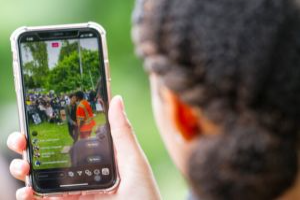
Codified under the California Right to Record Act (Senate Bill 411), this statute explicitly establishes that merely recording a police officer does not constitute resisting, delaying, or obstructing an officer under California law.
Furthermore, PC 148(g) prevents officers from using recording activity as the sole basis to detain, search, or arrest a bystander.
Legal Definition
Under California law, the legal definition of Penal Code § 148(g) PC reads as follows:
"(g) The fact that a person takes a photograph or makes an audio or video recording of a public officer or peace officer, while the officer is in a public place or the person taking the photograph or making the recording is in a place he or she has the right to be, does not constitute, in and of itself, a violation of subdivision (a), nor does it constitute reasonable suspicion to detain the person or probable cause to arrest the person."
To invoke the legal protections of Penal Code § 148(g) PC, three core conditions must be present:
-
Lawful Location: The officer is in a public place, or the person filming is in a location where they have a legal right to be (e.g., a public sidewalk, park, or private property with permission).
-
Open Observation: The individual is capturing an audio, video, or photographic recording of the officer performing official duties.
-
Absence of Obstruction: The recording process is conducted without physically interfering with, delaying, or impeding the officers' duties or creating an immediate safety hazard.
Penalties & Legal Status of PC 148(g)
Penal Code § 148(g) PC is a protective shield, not a standalone crime. There are no criminal penalties for recording an officer under PC 148(g) because recording law enforcement in public is completely legal in California.
However, if an officer claims that your recording crossed the line into physical obstruction or interference, law enforcement may attempt to arrest you under Penal Code § 148(a)(1) PC (Resisting, Delaying, or Obstructing an Officer).
Penalties for Related Allegations (PC 148(a)(1) Misdemeanor)
-
Up to 1 year in county jail.
-
Maximum fine of up to $1,000.
-
Summary (informal) probation.
Civil Rights Protections & Police Misconduct
If an officer unlawfully detains you, arrests you, seizes your device, or deletes your footage solely for recording them, they violate PC 148(g) and your First and Fourth Amendment rights.
Victims of unlawful arrest or phone confiscation may have grounds to file a formal internal affairs complaint or pursue a federal civil rights lawsuit under 42 U.S.C. § 1983.
Legal Defenses Against Interference Allegations
When an individual is wrongfully charged with resisting or obstructing an officer (PC 148(a)(1)) while attempting to record police activity, several powerful defenses apply under PC 148(g):
-
Protection Under PC 148(g) / Pure Exercise of First Amendment Rights: Showing that your actions consisted strictly of holding a recording device from a lawful vantage point without physical interference.
-
Safe Physical Distance: Demonstrating via the video recording itself that you maintained a safe distance from the officers and did not block their movement, access, or line of sight.
-
Unlawful Detention or Arrest: PC 148(g) explicitly states that recording police does not provide reasonable suspicion for a detention or probable cause for an arrest. If the detention was illegal, any resulting charge under PC 148(a)(1) must be dismissed.
-
Failure to Obey an Unlawful Order: Officers cannot legally order you to stop recording or put your phone away if you are in a public space. Disobeying an unlawful order to stop filming does not constitute criminal obstruction.
-
No Unlawful Physical Intrusion: Proving that you did not enter a secured crime scene, cross police tape, or physically intrude into an active arrest zone.
Hypothetical Examples
-
Bystander Filming Traffic Stop: A pedestrian stands on a public sidewalk 15 feet away filming officers conducting a DUI field sobriety test. The officer demands he stop filming and hand over his phone. Because the pedestrian is in a public place and not interfering, his conduct is protected under PC 148(g).
-
Entering an Active Crime Scene: A citizen records an officer making an arrest but walks directly between the officer and the suspect, ignoring orders to step back behind police tape. Because she physically intruded into the active arrest zone, she can be lawfully arrested for obstruction under PC 148(a)(1), not for filming.
-
Filming from Private Property: A homeowner films police activity occurring on the street from her front porch. An officer orders her to go inside and stop recording. Because she has a legal right to be on her private property, her recording is fully protected by PC 148(g).
Related California Offenses & Strategic Impact
-
Penal Code § 148(a)(1) PC – Resisting, Delaying, or Obstructing an Officer: The primary misdemeanor charge officers use when asserting that recording crossed into interference.
-
Penal Code § 69 PC – Resisting an Executive Officer: Covers attempts to deter or resist law enforcement using physical force or threats.
-
Penal Code § 632 PC – Eavesdropping / Recording Confidential Communications: Prohibits recording confidential conversations without consent; however, public police encounters are explicitly excluded because public duties carry no expectation of privacy.
-
California Civil Code § 52.1 (Bane Act): Provides a civil remedy for individuals whose constitutional right to record was infringed through police threats, intimidation, or coercion.
Why Related Laws Matter
When disputes arise over recording law enforcement, officers rarely cite PC 148(g) directly; instead, they often arrest citizens under PC 148(a)(1) (Obstruction) or PC 69 (Resisting) by claiming the individual was "too close" or "creating a distraction".
Understanding how PC 148(g) interacts with these criminal charges allows defense attorneys to utilize video footage to demonstrate compliance, file motions to suppress illegally seized evidence, and move for a complete dismissal of wrongfully filed obstruction counts.
Frequently Asked Questions (FAQs)
Is it legal to record police officers in California without their consent?
Yes. California Penal Code § 148(g) explicitly protects your right to take audio, video, or photographic recordings of peace officers in public spaces without needing their permission.
Can police arrest me just for filming them?
No. PC 148(g) specifically states that recording an officer in a public place does not constitute reasonable suspicion to detain you or probable cause to arrest you.
Can a police officer order me to stop recording or delete my video?
No. Officers cannot lawfully order you to stop recording in a public space, nor can they demand your phone or delete your footage without a judicial warrant. Deleting evidence may constitute an illegal search and seizure under the Fourth Amendment.
How far away do I need to stand when recording police?
While California law does not specify an exact distance in feet, you must remain far enough away that you do not physically impede, delay, or interfere with the officers' ability to perform their duties or compromise safety.
Does PC 148(g) allow me to record police on private property?
Yes, provided you have a legal right to be on that private property (such as your home, business, or a location where you are an invited guest).
What should I do if an officer threatens to arrest me for recording?
Remain calm, do not physically resist, and state clearly: "I am maintaining a safe distance and exercising my right to record under California Penal Code 148(g)." Do not physically struggle if they place you under arrest.
Does California's wiretapping law (PC 632) apply to recording police?
No. California Penal Code § 632 applies to confidential communications where there is a reasonable expectation of privacy. Police officers performing public duties in public spaces have no reasonable expectation of privacy.
Can my video recording be used as defense evidence if I am wrongfully charged?
Yes. Cell phone video captured under PC 148(g) is often the single most critical piece of evidence used by defense lawyers to disprove false claims of obstruction and secure a dismissal of PC 148(a)(1) charges.
Eisner Gorin LLP can help you. Schedule your consultation by calling (818) 781-1570 or by using the contact form.

 If you have one phone call from jail, call us! If you are facing criminal charges,