
Being arrested in California can be a frightening experience, especially if it's your first time. Getting in touch with a lawyer or loved one when you're detained becomes a high priority, and it's a common theme in virtually every police drama on TV that a person gets one phone call in these situations.
But what if it happens in real life? Do you really get a phone call? Is that a courtesy, or a right? Understanding your rights in this situation can be a source of reassurance and empowerment.
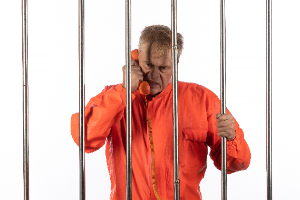
The good news is that, contrary to popular belief, California law guarantees you not just one, but three phone calls when you're arrested. This practical provision ensures that you can reach out for help when you need it most. (Penal Code 851.5 PC)
If someone is "detained," the police officer is holding a person for a short amount of time. If a reasonable person would not feel free to leave, or police prevent a person they are questioning from leaving, that detention turns into an arrest.
Police take arrestees to a local jail precinct, where they are then booked. In either scenario, the Fifth Amendment right to remain silent applies and should be invoked. This means you have the right to refuse to answer any questions until you have a lawyer present.
Simply put, after a person is arrested and booked, they are entitled to phone calls immediately upon booking, and no later than three hours after arrest. This provision ensures your right to reach out for help and support, providing a sense of security and protection. Let's take a closer look at this right and how it applies to your case.
Provisions of the Law
Arrestees are entitled to make at least three phone calls at no expense if they are within the local calling area and at the arrested person's own expense. Local calling areas do not necessarily refer to anything within the same area code as the jail.
A sign posted near the telephone booth typically provides information on which phone numbers are considered local. Collect calling is also an option for making phone calls to a number outside of the local area. Arrestees may call an attorney, a bail bondsman, or any friend or relative.
As noted, under PC 851.5, anyone who has been arrested and booked has the right to make phone calls. Here are some key specifics of the law:
- The three calls must be completed, not just dialed. This means a connection must be made with the other party for the call to count.
- You must be offered these calls as soon as it's feasible. These three calls must be granted to you as the arrestee as soon as physically possible, but no later than three hours after the arrest.
- The calls must be free of charge in the local dialing area. If the calls are to numbers outside the local calling area, they are made at your expense.
- These rights must be clearly posted. A sign with these rights must be clearly posted in English and other relevant languages spoken by a significant portion of the local population.
Who Can Be Called?
This right enables arrestees to secure the help they need during a critical window of time. These three phone calls can be used to contact any of the following:
- An Attorney - This is perhaps the most important call to make. Whether you already have a lawyer or need to reach the public defender assigned to your case, this call is critical for getting immediate legal advice. Under the law, this attorney-client communication must not be monitored, eavesdropped on, or recorded.
- A Bail Bondsman - If bail is set, contacting a bail bondsman can allow you to begin the process of securing your release.
- A Relative or Other Person - Whether it's a close family member or a trusted friend, this call enables you to coordinate support, such as notifying someone of your arrest and arranging practical assistance.
Additional Protections for Custodial Parents
PC 851.5 has additional built-in protections for custodial parents who have responsibility for minor children. If you are a parent in this position, you may request two additional phone calls.
These are granted for the specific purpose of arranging care for your children, ensuring their safety and welfare in your absence. Like the initial three calls, these must also be provided free of charge for local numbers or at your expense if they are long-distance.
What Does PC 851.5 Say?
California Penal Code 851.5 PC says, "(a)(1) Immediately upon being booked and, except where physically impossible, no later than three hours after arrest, an arrested person has the right to make at least three completed telephone calls, as described in subdivision (b).

(2) The arrested person shall be entitled to make at least three calls at no expense if the calls are completed to telephone numbers within the local calling area or at their own expense if outside the local calling area.
(b) At any police facility or place where an arrestee is detained, a sign containing the following information in bold block type shall be posted in a conspicuous place:
The arrestee has the right to free telephone calls within the local calling area, or at their own expense if outside the local calling area, to three of the following:
(1) An attorney of his or her choice or, if he or she has no funds, the public defender or other attorney assigned by the court to assist indigents, whose telephone number shall be posted. This telephone call shall not be monitored, eavesdropped upon, or recorded.
(2) A bail bondsman.
(3) A relative or other person.
(c) As soon as practicable upon being arrested, but, except where physically impossible, no later than three hours after arrest, the arresting or booking officer shall inquire as to whether the arrested person is a custodial parent with responsibility for a minor child.
The arresting or booking officer shall notify the arrested person who is a custodial parent with responsibility for a minor child that he or she is entitled to, and may request to, make two additional telephone calls at no expense if the telephone calls are completed to telephone numbers within the local calling area, or at his or her own expense if outside the local calling area, to a relative or other person for the purpose of arranging for the care of the minor child or children in the parent's absence.

(d) At any police facility or place where an arrestee is detained, a sign containing the following information in bold block type shall be posted in a conspicuous place:
The arrestee, if they are a custodial parent with responsibility for a minor child, has the right to two additional telephone calls within the local dialing area, or at their own expense if outside the local area, for the purpose of arranging for the care of the minor child or children in the parent's absence.
(e) These telephone calls shall be given immediately upon request, or as soon as practicable.
(f) The signs posted pursuant to subdivisions (b) and (d) shall make the specified notifications in English and any non-English language spoken by a substantial number of the public, as specified in Section 7296.2 of the Government Code, who are served by the police facility or place of detainment.
(g) The rights and duties set forth in this section shall be enforced regardless of the arrestee's immigration status.
(h) This provision shall not abrogate a law enforcement officer's duty to advise a suspect of his or her right to counsel or of any other right.
(i) Any public officer or employee who willfully deprives an arrested person of any right granted by this section is guilty of a misdemeanor."
Critical Enforcement of this Right
An often-overlooked detail of PC 851.5 is that the rights it ensures are absolute, regardless of immigration status or other potential obstacles.
Law enforcement officials are expected to comply with these requirements in all circumstances unless doing so is physically impossible.
Failure to provide these rights is not only a violation of procedure but also a criminal offense. Any public officer or employee who willfully denies an arrestee the telephone access guaranteed under this law may be charged with a misdemeanor.
How a Criminal Defense Attorney Can Help
If your right to these phone calls was violated during your arrest, it's not a minor procedural error; it can have significant legal ramifications for your case. A skilled California criminal defense attorney can take this violation into account as part of your defense strategy.
Here's how an attorney may leverage such a situation in your favor:
- Questioning Law Enforcement Conduct - A violation of PC 851.5 raises serious questions about whether other procedural violations may have occurred. This can damage the credibility of law enforcement officers involved in your case.
- Challenging Evidence - If you were denied timely access to an attorney through denial of a phone call, any statements you made during that time may be inadmissible in court.
- Highlighting Patterns of Misconduct - For some defendants, pointing to repeated failures by law enforcement to follow their legal responsibilities can be a critical component of their defense. This could demonstrate a pattern of systemic issues that may impact the fairness of your case.
- Filing Complaints or Civil Actions - Beyond your immediate criminal defense, a lawyer can assist in filing complaints against the officers or department responsible for denying your phone call rights. This can serve as an additional accountability measure.
For more information, contact our criminal defense law firm, Eisner Gorin LLP, located in Los Angeles, CA.
Related Content:

 If you have one phone call from jail, call us! If you are facing criminal charges,