
In California, Penal Code 405a PC is a high-stakes felony charge that targets the act of forcibly removing a person from police custody during a riot.
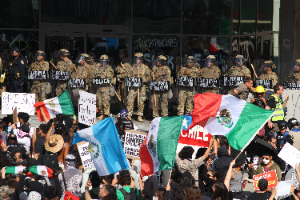
This statute is a "straight felony," meaning it cannot be reduced to a misdemeanor, and it carries much harsher penalties than simple rioting because it directly undermines the rule of law and endangers officers.
A riot occurs when two or more people act together to intentionally disturb the peace, often by threatening or using force or violence.
Violators face penalties of 2, 3, or 4 years in prison if they work together to disturb the peace using force or threats to free a person from police.
While participating in a riot in California is a significant offense on its own, the stakes increase dramatically when the riot conditions are used to remove someone from police custody.
Under Penal Code 405a PC, it is a felony offense to utilize a riot to remove someone who has been detained by law enforcement. If you're convicted of this crime, you could face up to 4 years in jail.
Key Takeaways
- California Penal Code (PC) 405a criminalizes taking someone from lawful police custody during a riot, a law that was once called "lynching" but was updated in 2015 to omit that term.
- Participating in a riot requires at least two people to disturb the peace through or by threatening force or violence.
- The riot's objective must be to forcefully remove a person from the lawful custody of a peace officer.
- An example includes a situation where a violent demonstration happens, and protesters surround an officer to remove someone already detained forcibly; those rioters could be charged with PC 405a.
- A conviction for this offense may adversely affect your immigration status. Committing an aggravated felony can lead to deportation or being labeled as inadmissible. Therefore, if the case's details strongly indicate that you committed an aggravated felony, your immigration status could be impacted.
What Does Penal Code 405a Prohibit?
California Penal Code 405a states:
“A person who participates in the taking by means of a riot of another person from the lawful custody of a peace officer is guilty of a felony…”
In plain terms, the statute applies when:
- A riot occurs, and
- The riot is used as a means to remove a person from lawful police custody, and
- The defendant actively participates in that removal.
This law was previously labeled as “lynching” under California law, but the terminology was removed in 2015 to focus on the conduct rather than the name. The offense itself, however, remains unchanged in seriousness.
What Is a “Riot” Under California Law?
Penal Code 404 defines a riot as an event where two or more people, acting together and without lawful authority, do any of the following:
- Use force or violence
- Disturb the public peace
- Threaten force or violence while having the immediate ability to carry it out
Peaceful protests do not qualify as riots unless they escalate into violence or threats of violence.
How Penal Code 405a Differs from Regular Rioting
Most riot-related charges fall under Penal Code 405, which is a misdemeanor punishable by up to one year in county jail.
Penal Code 405a dramatically escalates the charge because it involves:
- Interference with lawful police custody, and
- Collective force or threats aimed at freeing a detainee
Because of this added element, PC 405a is a straight felony and cannot be reduced to a misdemeanor.
Elements the Prosecution Must Prove
To secure a conviction for PC 405a, the District Attorney must prove three specific elements beyond a reasonable doubt:
- Existence of a Riot: At least two people acted together to use or threaten force/violence to disturb the peace.
- Lawful Custody: The person removed was under the actual, legal control of a peace officer.
- Active Participation: You willfully took part in the "taking" or removal of that person using the riot as the means.
Note: The person being "rescued" can also be charged under PC 405a if they actively encouraged or incited the mob to help them escape.
What Are Some Examples?
EXAMPLE 1: During a protest that turns violent, police arrest a protester. A group of surrounding individuals surrounds the officers, shoving them and pulling the arrestee free from their grip, allowing the arrestee to escape into the crowd. These individuals may be charged under PC 405a.
EXAMPLE 2: Two officers place a suspect in a patrol car. A group of people gathers, rocks the car, and forces the doors open. Several individuals physically pull the suspect out of the vehicle and drag them away from the scene. Since the collective actions of this group (no matter how small) constitute a riot, they can be charged under PC 405a.
What are the Related Laws?
- Penal Code 404 – Rioting
- Penal Code 405 – Participation in a riot
- Penal Code 69 – Resisting an executive officer
- Penal Code 409 / 416 – Failure to disperse
- Penal Code 407 / 408 – Unlawful assembly
- Penal Code 602.1 – Obstructing public business
Penalties for Violating Penal Code 405a
A conviction under PC 405a carries:
- 2, 3, or 4 years in county jail under Penal Code 1170(h)
- A permanent felony criminal record
- Loss of firearm rights
- Serious consequences for employment, housing, and professional licensing
Collateral Consequences: Immigration and Rights
Penal Code 405a is often classified as a crime involving moral turpitude and may be treated as an aggravated felony for immigration purposes. This can result in:
- Mandatory deportation
- Inadmissibility to the United States
- Ineligibility for asylum or lawful permanent residence
- A lifetime ban on firearm ownership in California.
Non-citizens charged under PC 405a should seek legal counsel immediately.
What Are the Common Defenses for Charges under PC 405a?
Being charged with a crime under PC 405a does not guarantee a conviction. A skilled California criminal defense attorney can evaluate the details of your arrest and build a defense strategy tailored to your case. Common defenses may include:
- Lack of Intent or Active Participation: Mere presence at the scene of a riot is not a crime under PC 405a. The prosecution must prove that you actively participated in the taking of the prisoner. If you were simply a bystander swept up in the chaos, your attorney can argue that you did not commit the act.
- No "Riot" Existed: If the gathering did not meet the legal definition of a riot—for example, if it was a peaceful protest and the "force or violence" element was absent—then the charge of taking a person by means of a riot cannot stand.
- Unlawful Custody: The statute requires the custody to be lawful. If the police officer lacked probable cause to arrest or detain the person in the first place, the custody may be deemed unlawful. While this is a complex legal argument, it attacks a core element of the crime.
- Misidentification: Riots are chaotic, confusing events often occurring at night or in low visibility. Law enforcement may rely on grainy video footage or hurried observations. It is common for innocent individuals to be misidentified as perpetrators in such confused environments.
- Self-Defense or Defense of Others: In rare instances, if the police were using excessive or lethal force against a detainee that was clearly unjustified, an argument could be made regarding the defense of another person. However, this is a highly specific and difficult defense to prove without skilled legal counsel.
Why Legal Representation Is Critical
Penal Code 405a cases often involve:
- Multiple defendants
- Video and social media evidence
- Political or protest-related contexts
- Enhanced scrutiny by prosecutors
Early legal intervention can make the difference between dismissal, reduction, or years of incarceration.
Speak With a California Criminal Defense Attorney
If you are under investigation or charged with taking a person from custody during a riot, immediate legal representation is essential.
Eisner Gorin LLP is a Los Angeles–based criminal defense firm with extensive experience handling serious felony cases involving protest-related offenses and allegations of group violence. Contact us for a confidential case evaluation.
Related Content:

 If you have one phone call from jail, call us! If you are facing criminal charges,