
Amid the continuing unrest in southern California fueled by strong reactions to Immigration and Customs Enforcement (ICE) activity, many have taken to the streets in protests against this activity.
While most of these protests have remained largely peaceful, some demonstrators have faced arrest and even felony charges due to actions that crossed legal boundaries.
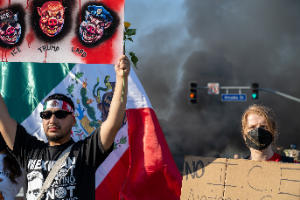
These developments underscore the crucial need for protesters to fully understand how certain behaviors during a protest can escalate into serious legal consequences. This knowledge empowers you to make informed decisions and be prepared to navigate these situations.
Peaceful protest is not just a powerful tool for individuals seeking to express their views and demand change; it's a constitutional right that not only validates your cause but also supports your actions.
However, remember that the right to protest does not extend to actions that endanger others, destroy property, or violate established laws and regulations. Peaceful protest actions, such as marching, chanting, and holding signs, are within the legal boundaries and can effectively convey your message.
Law enforcement is currently on high alert due to the ongoing protests and is prepared to act swiftly to apprehend protesters perceived to be violating the law. This awareness should guide your actions during protests.
Some of these arrests may result in felony charges. By being informed, however, protestors can avoid inadvertently engaging in unlawful conduct that could have lasting legal ramifications. After an arrest, the legal process involves a court appearance, potential bail, and a trial. Understanding this process can help you navigate the situation effectively.
Key Takeaways
- Committing acts of violence against individuals, including law enforcement officers, or causing serious injury can lead to felony charges such as assault, aggravated assault, battery, and attempted murder.
- Intentionally damaging or destroying public or private property can result in felony vandalism charges, Penal Code 594 PC, especially if the damage exceeds a certain value or involves significant destruction.
- Encouraging or instigating others to engage in a riot or other violent and destructive behavior can be charged as a felony under California Penal Code Section 404.6 PC.
- Stealing property, particularly if the value of the stolen property exceeds $950, can result in felony grand theft charges. Felony charges are more likely in cases involving high-value property or stolen firearms.
- While resisting arrest, Penal Code 148 PC is typically a misdemeanor; using violence or force against an officer while resisting arrest, or attempting to take an officer's weapon, can elevate the charge to a felony.
- Certain crimes known as "wobblers" can be charged as either a misdemeanor or a felony, depending on the specifics of the case and the defendant's criminal history. Examples of wobblers in protest situations include grand theft, burglary, and assault with a deadly weapon.
- California Penal Code Section 149 criminalizes the act of a public officer, such as a police officer, assaulting or beating someone without lawful necessity while acting under authority.
Let's look at some common protest-related behaviors that could result in felony charges in California.
Assaulting a Peace Officer
California law defines this as an attempt to use force or violence against law enforcement personnel who are performing their duties (Penal Code 241 PC).

This is a misdemeanor under normal circumstances, but if the assault involves a deadly weapon or results in serious injury to the officer, the charge escalates to a felony under Penal Code 245(c).
For instance, throwing objects, such as bricks or bottles, at officers can meet the threshold for felony assault, potentially leading to severe penalties, including years of imprisonment and substantial fines.
PC 241(c) says: "When an assault is committed against a peace officer, firefighter, emergency medical technician, paramedic, process server, traffic officer, code enforcement officer, animal control officer…. engaged in the performance their duties….and the person committing the offense knows they were police officer, etc., the assault is punishable by a fine up to $2,000 or up to one year in county jail, or by both the fine and imprisonment."
There are several defenses to charges of assaulting a federal officer.
Assault with a Deadly Weapon
Assault with a deadly weapon, also known as aggravated assault, involves using an object capable of causing serious bodily harm against another person.

During protests, this can include actions such as striking someone with a blunt object, throwing projectiles, or targeting others with harmful substances (for example, attacking counter-protesters).
Under California Penal Code 245, assault with a deadly weapon is a "wobbler" offense, meaning it can be charged either as a felony or misdemeanor. However, in the context of protest, civil unrest, or a declared emergency, it is almost always charged as a felony.
Assaulting a peace officer in the discharge of their duties under PC 245(c) and 245(d) PC is a felony offense. The prison terms for this crime are automatically longer than those for committing the same crime against a civilian, underscoring the severity of the offense.
If you're convicted of this crime, depending on the type of weapon used, you could face up to 12 years in state prison.
Vandalism
Under California Penal Code 594, vandalism involves defacing, damaging, or destroying property. While smaller instances of vandalism may be charged as misdemeanors, causing damage that exceeds $400 is considered a felony.
Examples of vandalism during protests include spray painting walls, breaking windows, or damaging vehicles. Beyond criminal penalties, vandalism convictions often carry additional financial consequences, such as restitution payments to compensate property owners for their losses.
PC 594 says, "Every person who maliciously commits any of the following acts with respect to any real or personal property not their own, in cases other than those specified by state law, is guilty of vandalism: (1) Defaces with graffiti or other inscribed material. (2) Damages. (3) Destroys."
Looting
Looting (Penal Code 463), or theft committed amid a state of emergency, is another action that often arises during heightened protest activity.
Looting is treated harshly under California law, as it compounds the damages already caused by public unrest. Stealing goods from retail stores or other establishments during chaotic demonstrations is a felony in most circumstances.
Penalties for looting vary depending on the value of the stolen property, with harsher consequences for thefts exceeding $950. Additional factors, such as the manner in which the crime was committed, can influence sentencing.
Arson and Setting Fires
California Penal Code 451 classifies willful and malicious acts of setting fire to buildings, structures, or other property as arson. Such offenses pose significant risks to public safety and are severely punished under the law.
Even setting small fires to make a political statement can lead to unintended consequences, such as widespread property damage or harm to individuals. Felony arson convictions can result in lengthy prison sentences and fines that may financially devastate those convicted. Refraining from fire-related activities during protests is crucial to minimizing both personal risk and potential harm to others.
You can also be convicted for aiding, counseling, or procuring the burning of property. Arson is a felony punishable by up to 9 years in jail or state prison.
Safeguarding the Right to Protest
Protesting is a vital mechanism for speaking out against injustices and rallying for meaningful change. However, protestors must be aware of the legal boundaries that define lawful expressions of dissent.
When actions deliberately or unintentionally break the law, individuals may face severe legal consequences that undermine their efforts and personal freedoms. By understanding behaviors that can lead to felony charges, advocates for justice can ensure their voices are heard without sacrificing their safety or their future.
Law enforcement often reviews video and social media footage to identify and prosecute individuals involved in illegal activity. Sometimes, federal authorities may bring federal charges against protesters for actions that violate federal laws.
For additional information, contact our California criminal defense lawyers, Eisner Gorin LLP, located in Los Angeles, CA.

 If you have one phone call from jail, call us! If you are facing criminal charges,