
The recent surge in protests against Immigration and Customs Enforcement (ICE) operations has placed Los Angeles at the center of a tense national discussion.
Over the past month, large crowds have taken to the streets, many to voice their concerns over federal immigration practices. While most demonstrations have remained peaceful, some have escalated into violence or criminal activity.
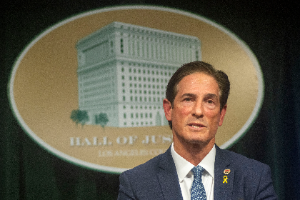
During the height of the initial protests, Los Angeles District Attorney Nathan Hochman issued a stern warning to those who might exploit these protests for unlawful purposes.
His message: while peaceful assembly is a fundamental right, illegal actions will be met with vigorous legal prosecution.
Simply put, the LA District Attorney has issued warnings to protestors, emphasizing the importance of keeping demonstrations peaceful.
He said that while his office will always defend the right to protest peacefully, they will not disregard criminal behavior that jeopardizes public safety or endangers law enforcement officers and others.
Hochman also distinguished between lawful expression and unlawful conduct, stating that his office will hold accountable those who engage in violence and destruction.
Continued Filing of Criminal Charges
The DA's Office intends to continue filing charges against individuals who use violence and unlawful behavior to disrupt peaceful protests. He recently announced charges against individuals involved in immigration protests for crimes such as assaulting police officers, using destructive devices, and looting.
He warned that such behavior will not be tolerated and his office will collaborate with law enforcement to ensure criminals and agitators are arrested, charged, and held accountable.
Common charges for protesters arrested in Los Angeles can range from misdemeanors like failure to disperse and resisting arrest to more serious felonies like assault on a peace officer, vandalism, and looting.
Understanding the specific laws and charges that may apply to your actions during a protest is crucial. If you are arrested for protesting in Los Angeles, it's important to be aware of the charges you may face and the potential legal consequences.
A Firm Stance from Law Enforcement
During a recent interview, Hochman addressed the uptick in unrest surrounding ICE activity in Los Angeles. He emphasized the distinction between lawful protest and criminal misconduct, reaffirming that his office stands firmly behind the right to peaceful protests.

However, when demonstrations cross the line into vandalism, assault, or other criminal offenses, his office is prepared to take decisive action.
Hochman pointed to incidents of vandalism, assaults on police officers, and looting during recent protests as examples of behavior that will face severe repercussions. According to Hochman, potential charges for such crimes range from felony vandalism to burglary and robbery, all of which can carry years of prison time.
"This is your warning," said Hochman, directly addressing those who have previously engaged in violent protests or those considering unlawful actions. His office is actively investigating individuals with prior convictions linked to uprisings such as those seen in 2020.
These individuals, considered "professional agitators," could encounter enhanced charges and harsher sentences as repeat offenders.
The Legal Risks of Violent Protests and Unlawful Activity
Hochman's comments underscore the legal risks for anyone accused of participating in crimes during protests, particularly those of this nature. Some of the most common charges include (but are not limited to):
- Resisting Arrest: Interfering with or obstructing law enforcement officers during a demonstration constitutes resisting arrest. While often treated as a misdemeanor, such charges can escalate in situations where violence or injury occurs.
- Failure to Disperse: When law enforcement declares a protest unlawful due to the presence of violent or criminal activity, officers typically issue a warning to protestors to disperse. Failure to do so can result in arrest.
- Failure to Leave After a Warning. Under PC 409, individuals who remain at the scene of an assembly that has been declared unlawful or designated as a riot may be charged with failure to leave if they ignore orders from law enforcement to leave the scene.
- Vandalism: Acts of vandalism, such as graffiti or damaging public or private property, can range from misdemeanors to felony offenses depending on the extent of the damage. Felony vandalism can carry heightened penalties, especially if it exceeds the monetary threshold of $400.
- Looting: When demonstrations devolve into widespread theft or commit burglary during times of civil unrest, individuals involved may face looting charges, typically charged as a felony.
- Assault on a Police Officer: Physical confrontations with law enforcement carry some of the most severe consequences. Assaulting a police officer can result in felony charges and significant prison sentences.
- Assault with a Deadly Weapon Against a Police Officer. The state of California takes crimes against police officers very seriously, given their critical role in maintaining public safety. Assaulting a person with a deadly weapon (Penal Code 245 PC(c)) may be charged in general as a misdemeanor or a felony, depending on the circumstances.
- Violating a Curfew Order. When civil unrest occurs, local authorities often impose curfew orders to limit public activity during specific hours. Violating a curfew order occurs when an individual remains in a public space during restricted hours without a lawful reason.
- Arson. Arguably, the most severe charge associated with protests, PC 451, makes it a felony to willfully and maliciously set fire to any property. While rare, instances of arson may arise in protests where fires are deliberately started to damage property or obstruct law enforcement, as occurred in the recent protests when individuals set fire to a number of vehicles.
Heightened Penalties in Declared Emergencies
California law allows for enhanced charges and penalties under declared emergencies or times of civil unrest. For example, what might typically be classified as petty theft can be charged as looting, a more severe offense.

Similarly, the state often treats curfew violations and failure to disperse orders more seriously during times of unrest. Understanding the potential consequences ahead of participating in protests during declared emergencies is essential to avoid unintended repercussions.
For individuals with past convictions related to protests, Hochman's remarks signal an especially concerning reality. Repeat offenders identified as "professional agitators" face intensified scrutiny and potential sentence enhancements. These individuals may be perceived as threats to public safety, prompting authorities to pursue the most serious charges possible.
Hochman made it clear that this is not a "catch-and-release" situation. Arrested individuals, especially those with prior convictions or a perceived intent to incite violence, may face prolonged detention and substantial legal consequences.
The Importance of Legal Counsel
Many people assume that being arrested in connection with a protest results in a sort of "catch-and-release" situation, especially when protestors are arrested en masse.
However, Hochman's remarks have made it clear that this is not the case when it comes to these recent ICE protests. Arrested individuals, especially those with prior convictions or a perceived intent to incite violence, may face prolonged detention and substantial legal consequences.
Anyone accused of crimes related to these protests may face more severe charges than they would normally expect.
For this reason, it's essential to hire an experienced California criminal defense attorney if you are arrested in connection with the Los Angeles protests. A skilled attorney can evaluate the specifics of the case, ensure your rights are protected, and negotiate on your behalf.
They can also challenge any unwarranted or excessive charges, particularly in cases involving misdemeanor escalations or accusations of professional misconduct. For more information, contact our criminal defense law firm, located in Los Angeles.
Related Content:

 If you have one phone call from jail, call us! If you are facing criminal charges,