
The streets of Los Angeles have been marked by unrest and confrontation over the last several weeks as ongoing ICE raids have ignited widespread protests. Demonstrators poured into the streets in June, voicing opposition to what they described as inhumane immigration enforcement tactics.
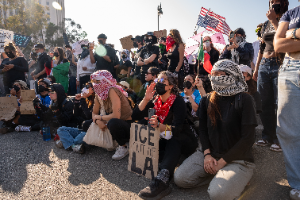
Tensions reached a boiling point when some of these protests escalated into chaos, resulting in violent clashes between protestors and law enforcement, enhanced even further when President Trump bypassed Governor Newsom's jurisdiction by calling in the National Guard and the U.S. Marines.
Arrests have been numerous, with dozens detained as the situation unfolded, and tensions remain high as high-profile ICE raids have been ongoing across the area.
The tension hasn't been limited to Los Angeles; similar protests have erupted across the country, both in the form of millions attending "No Kings" marches nationwide on June 14 and various protests outside ICE detention facilities and in front of courthouses.
High-Profile Arrest
This has led to numerous arrests, even of high-profile individuals and government officials participating in the protests. Just a few examples:
- New York City Comptroller Brad Lander was arrested in a federal courthouse while accompanying an immigrant to a hearing.
- Newark, NJ, Mayor Ras Baraka and New Jersey Representative LaMonica McIver were arrested in an ICE protest outside Delaney Hall, an immigration detention facility in Newark. (McIver now faces federal charges as a result.)
- California Senator Alex Padilla was subdued and handcuffed while trying to ask a question during a presser with DHS Secretary Kristi Noem.
Importantly, what began as simple acts of civil disobedience have led to serious legal ramifications for some individuals, including federal charges, as ICE is considered a federal law enforcement agency. While charges may be based on several federal statutes, one of the most common charges filed is impeding and interfering with federal officers, as outlined in 18 U.S.C. § 111.
Assaulting or Resisting Officers (18 U.S. Code § 111)
Title 18 U.S. Code 111 Assaulting, resisting, or impeding certain officers or employees says, "(a) In General, Whoever-
(1) forcibly assaults, resists, opposes, impedes, intimidates, or interferes with any person designated in section 1114 of this title while engaged in or on account of the performance of official duties; or

(2) forcibly assaults or intimidates any person who formerly served as a person designated in section 1114 on account of the performance of official duties during such person's term of service -
Shall, where the acts in violation of this section constitute only simple assault, be fined under this title or imprisoned not more than one year, or both, and where such acts involve physical contact with the victim of that assault or the intent to commit another felony, be fined under this title or imprisoned not more than 8 years, or both.
(b) Enhanced Penalty-
Whoever, in the commission of any acts described in subsection (a), uses a deadly or dangerous weapon (including a weapon intended to cause death or danger but that fails to do so by reason of a defective component) or inflicts bodily injury, shall be fined under this title or imprisoned not more than 20 years, or both.
(c) Extraterritorial Jurisdiction. There is extraterritorial jurisdiction over the conduct prohibited by this section."
Representative McIver faces charges under this statute and various statutes under the umbrella of Obstruction of Justice (U.S.C. Title 73). Convictions under these federal laws can result in substantial fines and/or lengthy prison sentences.
For those charged, the stakes are indisputably high. Accusations of federal crimes bring the full weight of the U.S. government's prosecutorial power to the table. Securing experienced legal counsel becomes a necessity, as does having a clear understanding of your constitutional rights.
There are several defenses to charges of assaulting a federal officer.
Elements of the Crime
Prosecutors frequently invoke Section 111 in situations where demonstrators may engage in actions that obstruct the duties of either ICE or other law enforcement officers. To prove you violated U.S.C. 111, prosecutors must prove that:
- You acted forcibly, meaning with physical force or a threat of force; and
- The victim was a government officer or employee performing official duties.
Penalties under this statute vary based on the severity of the offense. Simple assault carries a maximum penalty of one year in prison. However, if the offense involves physical contact or the intent to commit another felony, the penalty increases to up to 8 years in prison. When a dangerous weapon is used or bodily injury is inflicted, the maximum penalty rises significantly to 20 years.
Obstruction of Justice Charges
Protests against Immigration and Customs Enforcement (ICE) operations, especially those involving attempts to hinder or impede arrests and enforcement actions, have often led to charges of obstruction of justice and other related offenses. Obstruction can include the following acts:
- Physically blocking ICE agents or vehicles involved in arrests or enforcement operations.
- Encouraging others to interfere with or obstruct an ICE arrest.
- Aiding and abetting an individual to evade arrest by providing transportation, shelter, or other means.
- Harboring an undocumented immigrant, shielding them from detection, or attempting to conceal them.
Obstruction charges can range from misdemeanors to felonies, depending on the severity of the act and the specific federal or state laws violated.
Penalties can include fines and potential jail time. For example, conspiracy to transport or harbor illegal noncitizens can result in up to 10 years in prison or a $250,000 fine. Assaulting federal officers can lead to felony charges.
Tips for Protestors
The U.S. Constitution protects your right to protest peacefully and your right to free speech. However, these rights must be navigated carefully in the context of potential legal consequences, especially in the high-tension atmosphere in which we currently find ourselves.
If you choose to engage in protest, the following key tips can minimize your risk of being arrested and/or charged with a crime.
Prepare in Advance
If you plan to participate in protests, take steps to prepare:
- Carry Identification- Ensure you have proper ID to help expedite the process if arrested.
- Write Down Important Contacts- Include the phone number of a legal support organization or attorney in case you are detained.
- Know Local Laws- Familiarize yourself with local protest regulations to avoid unintentional violations.
- Pack Strategically- Avoid carrying anything that could be misconstrued as a weapon.
Walk Away from Violence
If a protest begins to turn violent, quietly and calmly distance yourself from the scene to minimize your risks of being mistaken as a participant and being arrested for being in proximity.
Document Everything
If safe and possible, document any interactions with law enforcement during protests. This includes video recordings or notes of the event. Such evidence can play an essential role in protecting your rights and resolving legal disputes.
Know Your Rights if You Are Arrested
Whether you are protesting or observing, it's crucial to know your rights under the law. These include:
- The right to remain silent: You have the right to remain silent and should exercise it. Only provide your name and address if required by law.
- The right to counsel: You have the right to an attorney. Ask for one immediately and do not speak to the police without your lawyer present.
- The right to a phone call: You have the right to make a local phone call, and if calling your lawyer, the police are not allowed to listen.
- The right to medical attention: If you are injured in custody, you have the right to receive medical assistance.
- The right to refuse searches: You do not have to consent to a search of yourself or your belongings, including your phone, without a warrant.
Get Legal Help Immediately If Needed
The federal response to recent ICE protest arrests is a clear indication of the evolving risks associated with civic activism. Understanding your rights and seeking experienced legal representation are the most effective ways to protect yourself against escalating legal consequences.
If you are arrested during a protest and/or if you feel your rights have been violated in the course of a protest or an arrest, contact a skilled federal defense attorney immediately to ensure your rights are protected and to help you manage the potential challenges ahead.
For more information, contact our criminal defense law firm, Eisner Gorin LLP, located in Los Angeles, CA.

 If you have one phone call from jail, call us! If you are facing criminal charges,